
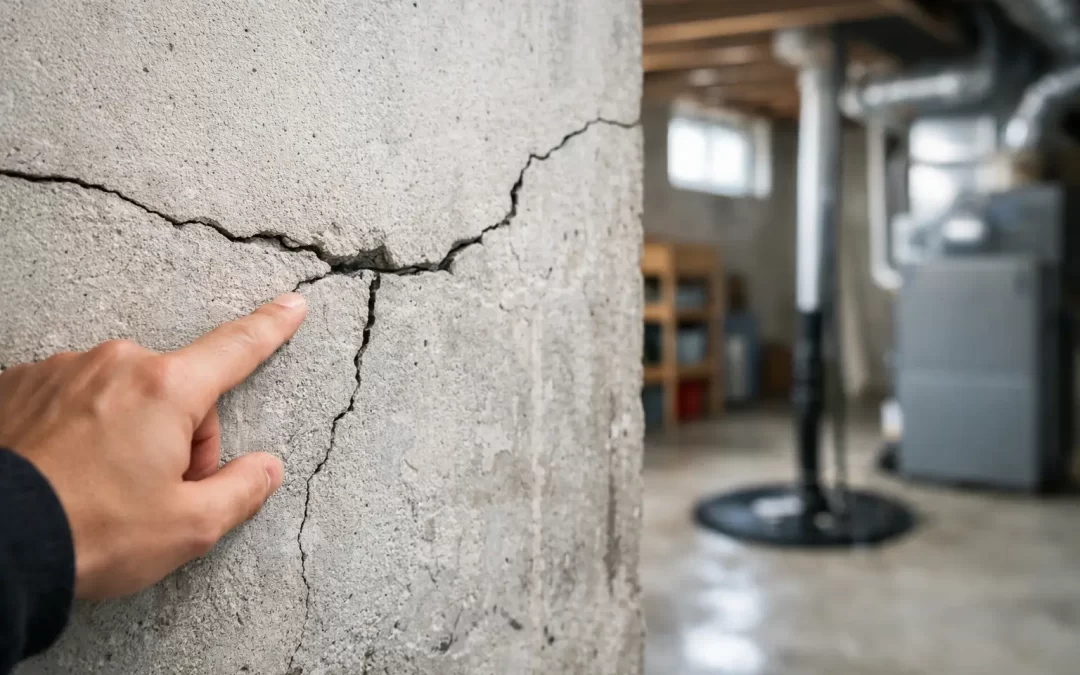
A hairline crack beside a basement window can be harmless surface shrinkage. A widening horizontal crack with damp soil behind it is a different matter entirely. For Winnipeg property owners asking what causes basement wall cracks, the answer usually starts outside the house: moving clay soil, trapped water, frost, poor drainage, or uneven support beneath the foundation.
Concrete is strong under compression, but it does not flex well. When pressure or movement exceeds what a foundation wall can tolerate, it cracks. The real concern is not simply whether a crack exists. It is why it formed, whether it is still moving, and whether water is using that opening to enter the basement.
What Causes Basement Wall Cracks?
Most basement wall cracks come from a combination of soil movement and moisture. Manitoba foundations deal with conditions that can change dramatically through the year. Wet periods expand clay soils, dry periods cause them to shrink, and winter frost adds another source of force around the foundation.
The crack pattern provides useful clues, but it is not a complete diagnosis on its own. A vertical crack may point to settling or concrete shrinkage. A horizontal crack often indicates pressure pushing inward. Diagonal cracks can signal uneven settlement around a corner, window opening, or section of footing. A proper inspection looks at the crack, the wall condition, the grading, drainage paths, and signs of movement throughout the structure.
Expansive clay soil movement
Red River clay is a major factor around Winnipeg. This soil holds water and expands when saturated. During dry weather, it can shrink and pull away from the foundation. That repeated swelling and shrinking creates uneven pressure against foundation walls and footings.
If one side of a home stays wetter than another because of roof runoff, a low yard, or poor drainage, the soil does not move evenly. One area may heave while another settles. That differential movement can produce diagonal cracks, vertical cracks, sticking doors, sloped floors, and cracks in drywall above grade.
Clay movement does not always mean a home needs major structural work. It depends on the degree of movement, the condition of the footing, and whether the problem is active. But ignoring recurring soil moisture problems allows the cycle to continue year after year.
Hydrostatic pressure from saturated soil
When the soil around a basement becomes saturated, water builds pressure against the exterior wall. This is hydrostatic pressure. It can force water through cracks, construction joints, porous concrete, and gaps around utility penetrations.
Water pressure becomes especially serious when exterior drainage is poor or a perimeter drainage system is blocked, damaged, or overwhelmed. In some cases, the first visible symptom is a damp strip along the basement floor. In others, water enters through a crack during heavy rain or spring snowmelt.
Hydrostatic pressure can also contribute to horizontal cracking and inward wall movement. A wall that is bowing, leaning, or showing a long horizontal crack should be assessed quickly. Cosmetic patching does not remove the pressure that created the problem.
Frost heave and freeze-thaw stress
Winnipeg winters put foundations through conditions that many warmer regions do not experience. Water in the ground freezes, expands, and can lift or push against nearby structures. Frost heave is more likely where drainage leaves water close to the foundation, where soil holds moisture, or where exterior surfaces direct runoff toward the house.
Freeze-thaw cycles also affect exposed concrete. Water enters small pores or cracks, freezes, expands, and gradually breaks down the concrete surface. This is common on foundation walls above grade, steps, walkways, parking structures, and exterior slabs. Spalling, flaking, and exposed aggregate are warning signs that concrete deterioration is underway.
Settlement and inadequate support below the footing
A foundation needs uniform support. If soil beneath part of a footing compresses, washes out, dries excessively, or was not properly compacted before construction, that section can settle. The structure above does not settle evenly, so cracks develop where the building is forced to adjust.
Settlement cracks are often vertical or diagonal. You may also notice gaps at trim, windows that no longer operate smoothly, cracked brick veneer, or separation between an addition and the original house. Older homes can develop these issues gradually, while newer homes may show them sooner if grading or soil preparation was poor.
Not every settlement crack is active. Some occurred years ago and have remained stable. Measuring the crack over time and inspecting related symptoms helps determine whether movement is ongoing.
Poor grading, downspouts, and drainage failures
A surprising number of foundation problems are made worse by simple water management failures. Downspouts that discharge beside the wall, landscaping that slopes toward the home, and clogged eavestroughs all concentrate water where it can do the most damage.
The goal is to move roof and surface water away from the foundation before it saturates the backfill. If the ground beside the house is consistently soft, puddles after rain, or slopes inward, the foundation is being exposed to avoidable moisture and pressure.
Interior drainage matters as well. A failed sump pump, an undersized pump, a blocked discharge line, or an ineffective weeping tile system can allow groundwater to rise beneath the slab and along the foundation wall. Repairing a crack without correcting the drainage source may only delay the next leak.
Concrete shrinkage and normal curing cracks
Not every crack points to structural failure. Concrete naturally shrinks slightly as it cures. Fine vertical hairline cracks can develop, particularly in poured concrete walls, even when the foundation is otherwise sound.
The difference is in the details. A small, dry crack that has not changed may need monitoring or preventative sealing. A crack that is wider at one end, offset from side to side, leaking, or growing over time deserves closer attention. The same applies when cracks appear with bowing walls, recurring moisture, or settlement symptoms upstairs.
Which Basement Cracks Need Prompt Repair?
A crack should be evaluated promptly if it admits water, has widened noticeably, runs horizontally across the wall, or appears with inward bowing. Diagonal cracks extending from basement windows or corners can also indicate uneven movement. If you can see one side of the crack has shifted outward or inward relative to the other, the wall may be under more than ordinary shrinkage stress.
For commercial and institutional properties, early assessment is equally practical. Water entering a below-grade wall can deteriorate reinforcing steel, damage finishes and equipment, create mold concerns, and disrupt building operations. Parking structures and concrete-heavy facilities may also show chloride-related deterioration, spalling, and cracking that require a different repair approach than a residential foundation crack.
One warning sign rarely tells the entire story. A contractor should look for the source of moisture, inspect drainage, identify wall movement, and determine whether a repair needs to address water entry, structural support, or both.
Repairing the Cause, Not Just the Crack
The right repair depends on what caused the crack. For a stable crack that leaks, injection or specialized crack sealing may stop water intrusion. For walls under lateral soil pressure, structural reinforcement, wall stabilization, excavation, waterproofing, or drainage corrections may be necessary. Where settlement is active, the repair plan must address the support issue instead of simply filling the visible opening.
There is a trade-off between a quick surface patch and a repair that lasts. Hydraulic cement and interior coatings can make a crack look better temporarily, but they may fail if water pressure or movement remains. Exterior waterproofing can be highly effective, but it may require excavation and should be paired with proper drainage and grading. The correct scope comes from diagnosis, not from choosing the least expensive material on the shelf.
Foundation Pros of Winnipeg approaches crack repair by identifying the pressure, water path, and soil conditions behind the damage. That matters because a dry basement and a stable wall require more than covering the symptom.
What You Can Do Before the Crack Gets Worse
Start by taking clear photos and noting the date. Watch for changes in crack width, moisture, staining, or new cracks nearby. Keep downspouts discharging well away from the foundation, clean eavestroughs, and make sure the grade slopes away from the house where practical.
Do not wait through multiple wet seasons if water is entering the basement or the wall is moving. Moisture damage does not stay limited to concrete. It can affect framing, insulation, flooring, stored belongings, and indoor air quality.
A basement crack is often the first visible sign that water or soil movement is working against the foundation. Getting an experienced assessment early gives you repair options before a manageable crack becomes a larger structural and waterproofing project.