
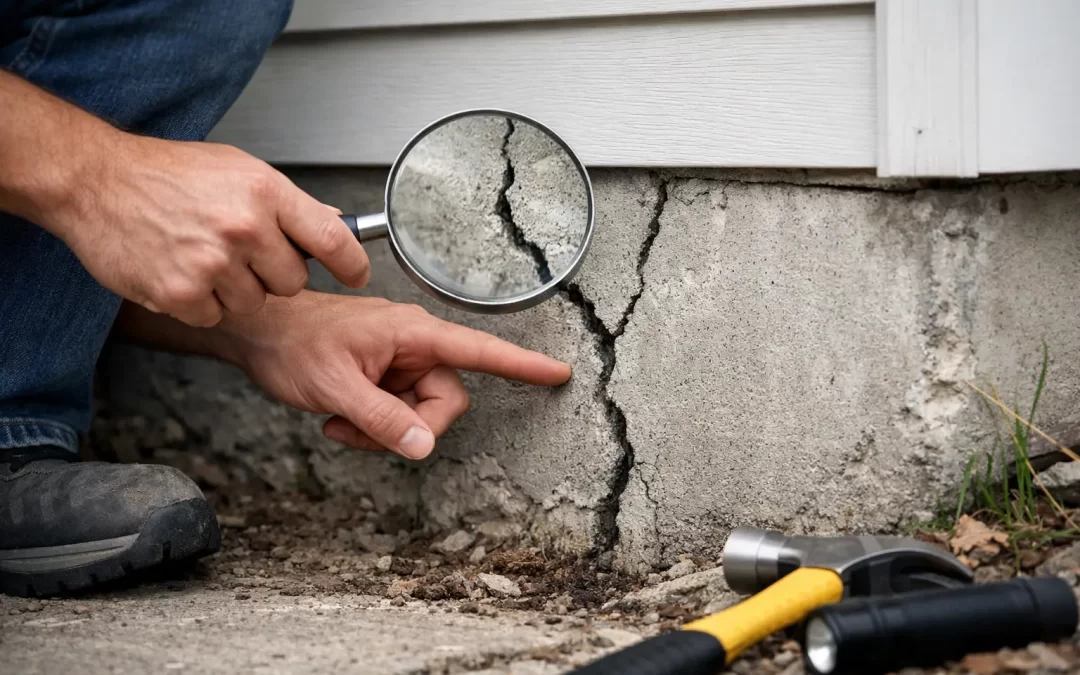
A hairline crack in a basement wall is not automatically a structural emergency. A crack that widens, shifts, leaks, or appears alongside sticking doors and sloping floors is a different matter. Knowing how to spot structural foundation cracks helps you act before soil movement and water pressure turn a manageable repair into major damage.
In Winnipeg and across Manitoba, foundations work under difficult conditions. Expansive clay soils can move as moisture levels change, groundwater can build pressure against basement walls, and freeze-thaw cycles punish concrete year after year. The crack itself matters, but the pattern, location, and changes around it tell the real story.
How to Spot Structural Foundation Cracks Before They Worsen
Structural cracks usually point to movement, pressure, or loss of support. They are not just surface defects in aging concrete. A foundation should be checked carefully when a crack is wider than about 1/8 inch, continues to grow, or has visible separation from one side of the crack to the other.
Start by looking at the direction. Horizontal cracks in poured concrete basement walls deserve prompt attention, especially when they run across the middle of the wall. They often develop when saturated soil pushes inward against the foundation. If the wall is bowing, leaning, or has a noticeable bulge, do not wait for the next rainy season to investigate.
Diagonal cracks are another common warning sign. A crack running at roughly a 30- to 75-degree angle from a corner of a window, door, or foundation wall can indicate uneven settlement. One area of the home may be sinking or shifting more than another. Stair-step cracking through concrete block or brick foundation walls can indicate the same type of differential movement.
Vertical cracks require more context. A narrow vertical crack may result from normal concrete shrinkage, particularly in a newer foundation. But a vertical crack that is wide, wet, offset, or widening from top to bottom should be assessed. Water entering through it can accelerate deterioration even if the original cause was not severe.
Signs That Make a Foundation Crack Structural
A single crack does not provide the whole diagnosis. Structural concern rises when the crack is paired with movement inside or outside the building. Walk through the property and look for changes that support what you see in the basement.
Inside the home, check whether doors no longer latch, windows bind, drywall cracks keep returning after repair, or gaps have opened where walls meet ceilings. Floors that slope noticeably or feel uneven can also point to settlement. In finished basements, watch for cracked tile, separated trim, or a musty smell along exterior walls. These can hide a foundation problem that has been developing behind finished surfaces.
Outside, inspect the brick, stucco, siding, and concrete around the home. Diagonal cracks extending from window corners, gaps around exterior doors, a separated chimney, or a deck pulling away from the structure should be taken seriously. So should a foundation wall that looks out of plane when viewed along its length.
The following conditions call for a professional inspection rather than a wait-and-see approach:
- A horizontal crack, bowed wall, or inward wall displacement
- Cracks wider than 1/8 inch or cracks that are visibly growing
- One side of a crack sitting higher or farther out than the other
- Water seepage, mineral staining, rusting reinforcement, or damp drywall near the crack
- Stair-step cracking in block, brick, or masonry walls
- Repeated interior cracking, sticking doors, or obvious floor slope
A crack that has been painted over can still be active. Fresh paint, paneling, or basement finishing does not stop soil pressure or water infiltration. It can simply make the evidence harder to see.
Measure and Monitor What You Find
If there is no immediate bowing, major displacement, or active water flow, document the crack before assuming it is stable. Take clear photographs with a ruler beside the crack. Record its width at several points, its length, and the date. Mark the ends lightly with pencil if the surface allows it.
Check it again after heavy rain, spring thaw, or a major temperature change. Movement over a few weeks or months is useful information for a foundation specialist. However, monitoring is not a substitute for action when the wall is already deforming, water is entering, or the building is showing broad settlement symptoms.
Crack Patterns That Are Often Less Serious
Not every concrete crack is structural. Hairline vertical cracks, shallow surface crazing, and small cracks in a garage slab may be related to curing shrinkage, temperature changes, or ordinary wear. They still need to be evaluated if water is getting through, but they do not always mean the foundation is failing.
For example, a fine vertical crack that remains narrow, has no offset, and has not changed over time may be repaired primarily to stop moisture intrusion. A crack in a concrete floor slab can also be less concerning than a wall crack because many basement slabs are not carrying the building load.
That said, there are exceptions. A slab crack that is wide, heaved, or accompanied by wet soil and floor movement may signal drainage issues, expanding clay, or groundwater pressure. The practical question is not simply, “Is there a crack?” It is, “What caused it, and is that cause still active?”
Why Foundation Cracks Develop in Winnipeg
Foundation cracks are often the visible result of conditions outside the wall. In this region, clay soil is a major factor. Clay expands when it absorbs water and shrinks when it dries. Seasonal swings can place uneven pressure on a foundation, particularly where drainage sends roof runoff toward the house.
Poor grading, overflowing eavestroughs, short downspout extensions, and failed weeping tile can keep the soil beside the foundation saturated. That increases hydrostatic pressure against basement walls and creates a direct path for water through existing cracks. During freezing conditions, water in soil can also expand and increase pressure on already vulnerable concrete.
Settlement can develop for other reasons as well. Soil may have been poorly compacted before construction, a plumbing leak may have softened supporting soil, or long-term moisture changes may have altered soil bearing capacity. Commercial buildings and older institutional properties can face added stress from larger wall spans, parking loads, deteriorated concrete, and years of water exposure.
Repairing only the visible crack without addressing drainage or soil pressure may stop a leak temporarily but leave the underlying problem in place. The right repair plan depends on whether the crack is caused by water pressure, settlement, wall movement, concrete deterioration, or a combination of issues.
What to Do When You Find a Concerning Crack
First, keep water away from the foundation as much as possible. Make sure downspouts discharge well away from the building, remove snow buildup that directs meltwater toward the wall, and correct obvious negative grading where practical. Do not excavate beside a damaged wall or try to push a bowed wall back into place yourself.
Avoid filling a wide or moving crack with hardware-store caulk and treating the job as complete. Surface products may improve appearance, but they do not stabilize a wall or relieve exterior pressure. Interior crack injection can be effective for certain leaking cracks, while other conditions may require exterior waterproofing, drainage correction, wall stabilization, underpinning, or concrete restoration work.
A proper assessment looks beyond the crack. It considers wall alignment, crack width and direction, moisture evidence, drainage conditions, surrounding soil, and symptoms throughout the structure. This is where experience matters. A small vertical leak may need a focused repair. A horizontal crack with wall deflection needs a more urgent structural plan.
Foundation Pros of Winnipeg has worked with the soil, water, and freeze-thaw conditions that affect local properties since 1995. An on-site assessment can identify whether you are dealing with a repairable leak, active settlement, or a wall under pressure, then match the work to the actual problem rather than applying a one-size-fits-all fix.
If a crack is changing, leaking, or appearing with signs of movement elsewhere in the property, take photos today and arrange a professional assessment before the next heavy rain or seasonal thaw gives the problem another chance to grow.