
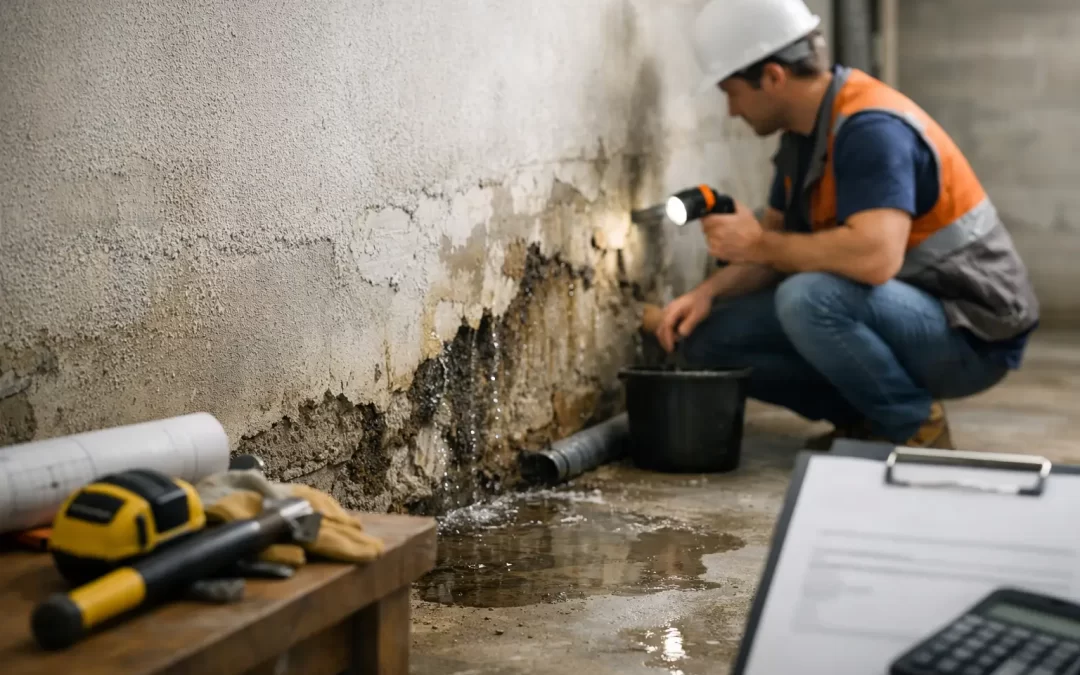
A basement leak rarely stays a basement leak for long. What starts as a damp wall, a musty smell, or a small puddle after heavy rain can turn into mold, damaged finishes, bowed walls, and a much bigger repair bill. If you are trying to understand leaking basement repair cost, the real question is not just what the repair costs today. It is what the problem will cost if water keeps finding its way in.
What affects leaking basement repair cost?
There is no flat price for a leaking basement because the repair has to match the cause. Two homes can both have water on the floor and need completely different work. One may have a single foundation crack. The other may have hydrostatic pressure pushing water through wall joints, poor grading outside, and a failing sump system.
The biggest cost drivers are where the water is entering, how often it happens, and whether the issue is limited to moisture control or has already turned into structural damage. A hairline crack that leaks during spring thaw is a very different job from a basement with repeated seepage, foundation movement, and water damage behind finished walls.
In Winnipeg and similar cold-climate regions, soil and weather matter more than many homeowners realize. Expansive clay soils, freeze-thaw cycles, snowmelt, and heavy rain can all increase pressure against the foundation. That pressure exposes weak points fast. A repair plan that ignores those conditions usually turns into repeat work.
Typical repair categories and price ranges
Most leaking basement repair cost falls into a few broad categories. The exact number depends on access, severity, materials, and whether the repair is done from the interior, exterior, or both.
Crack injection and localized crack repair
If water is entering through one or two foundation cracks, epoxy or polyurethane injection is often the most targeted fix. In many cases, this is the lowest-cost professional repair, commonly ranging from a few hundred dollars to around $1,500 per crack depending on length, accessibility, and whether there is active water flow.
This type of repair works well when the crack is the actual source of the leak and there is no major settlement or wall displacement. It is not the right answer for every wet basement. If the wall is moving or the crack is reopening because of shifting soil, injection alone may not solve the problem for long.
Interior drainage and sump pump work
When water is coming up at the cove joint where the wall meets the floor, or through multiple areas during wet periods, interior drainage may be part of the solution. This can include a perimeter drain system, sump pit installation, sump pump replacement, or battery backup.
These jobs often range from roughly $3,000 to $12,000 or more depending on the size of the basement and the equipment involved. A straightforward sump pump upgrade costs much less than a full perimeter interior waterproofing system. The trade-off is that interior systems manage water after it reaches the foundation rather than stopping it outside.
Exterior waterproofing and excavation
If the leak is caused by failed exterior waterproofing, blocked weeping tile, or visible wall deterioration below grade, exterior excavation is often the more complete repair. This typically involves digging down to the footing, cleaning and repairing the wall, applying a waterproof membrane, and improving drainage.
This is usually one of the more expensive solutions because of labor, excavation, soil handling, and site restoration. Homeowners often see costs from about $8,000 to $25,000 and up, especially if multiple walls are involved or access is tight. But when water is entering through buried wall sections or exterior cracks, this can be the repair that actually addresses the source.
Structural foundation repair
If the basement leak is tied to settlement, bowing walls, or severe cracking, the cost moves beyond waterproofing alone. Reinforcement, wall stabilization, underpinning, or section replacement may be needed before moisture control will hold.
That can push leaking basement repair cost into the $10,000 to $40,000-plus range depending on the damage. This is where cheap patch jobs become expensive mistakes. If the foundation is moving, cosmetic sealing is not a plan.
Why some estimates are much lower than others
A very low estimate usually means one of two things. Either the contractor is addressing only the visible symptom, or they are assuming the problem is smaller than it really is.
For example, painting a waterproof coating on an interior wall may slow minor dampness, but it will not stop pressure from outside. Caulking a crack at the surface may hide the leak briefly without sealing the full depth of the wall. Even a decent repair method can fail if the cause was diagnosed wrong.
That is why a proper assessment matters. The best estimate is not the cheapest number on paper. It is the one that explains where the water is coming from, why it is getting in, and what repair is meant to stop it.
Hidden costs homeowners often miss
The repair itself is only part of the financial picture. Water intrusion can damage far more than concrete.
If the basement is finished, there may be costs to remove drywall, insulation, flooring, trim, or built-in storage just to expose the problem. If the leak has been ongoing, mold remediation may also be needed. In commercial or institutional buildings, the added cost may include disruption to operations, tenant concerns, or damage to stored materials and equipment.
There is also the cost of delay. A leak that might be solved today with a targeted crack repair can turn into a larger waterproofing and restoration job after another wet season. That is common when homeowners wait for the problem to become more obvious. Water is already doing damage before the stain shows up.
Can you repair a leaking basement from the inside only?
Sometimes yes, sometimes no. This is one of the biggest it-depends questions in basement repair.
Interior crack injection can be very effective when the problem is isolated. Interior drainage can also be the practical choice when exterior excavation is blocked by decks, additions, tight lot lines, or expensive landscaping. In some cases, managing water from the inside is the most efficient option.
But if the outside wall is deteriorating, if the foundation has open joints below grade, or if groundwater pressure is severe, exterior repair may be the better long-term answer. A contractor who has worked with local soil movement and water conditions will usually know when an interior-only fix is enough and when it is just delaying the real work.
How local conditions change the cost
Basement leaks are not the same in every market. In areas with heavy clay soils and seasonal moisture swings, foundations deal with repeated expansion and contraction. Add freeze-thaw cycles, high water tables, and spring runoff, and minor defects can become active leaks quickly.
That affects leaking basement repair cost because the fix often needs to do more than seal one spot. It may need to account for drainage control, wall movement, and future water pressure. Contractors who understand regional conditions tend to recommend repairs that last longer because they are not treating the basement like it is in a dry, stable soil environment.
For property owners in Manitoba and surrounding areas, that practical field knowledge matters. Foundation Pros of Winnipeg has seen how fast water problems escalate when clay movement and poor drainage are left alone.
When to get an estimate right away
If you notice water after rain, damp spots that keep returning, white mineral staining on foundation walls, musty odors, or cracks that appear to be growing, it is time to get the basement assessed. The same goes for peeling paint, warped finishes, rusting metal supports, or a sump pump that runs constantly.
None of those signs automatically mean a major repair. Some are caught early and fixed without tearing up the whole basement or excavating the entire perimeter. The advantage of acting early is simple: you have more options, and the lower-cost options are more likely to still be on the table.
How to think about cost the right way
The best way to judge leaking basement repair cost is not by asking, “What is the cheapest way to stop water this week?” It is by asking, “What repair fits the actual failure and protects the building over time?”
A small crack repair may be the right answer. A drainage upgrade may be enough. In other cases, exterior waterproofing or structural correction is the only repair that makes financial sense because anything less will have to be redone. Good contractors will tell you that plainly.
If your basement is leaking, the next smart step is not guessing from a stain on the wall. It is getting the cause identified before another storm, another thaw, or another season pushes the damage further than it needs to go.