
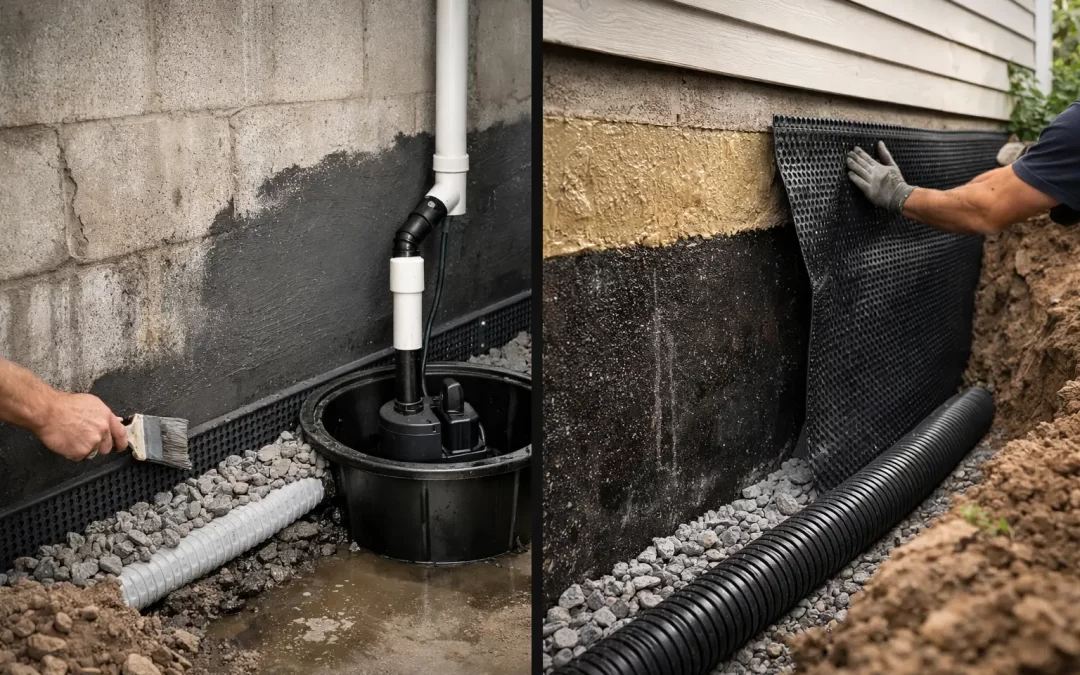
A wet basement usually starts with a simple question: do you stop the water outside, or manage it once it gets in? When homeowners compare interior vs exterior waterproofing, they are often already dealing with seepage at the wall-floor joint, damp concrete, musty air, or visible cracking. The right answer depends on where the water is entering, how the foundation is built, and how much risk the structure is already carrying.
This is where a lot of bad advice starts. Some contractors push interior systems for every basement because they are faster to install. Others insist exterior excavation is the only real fix. In practice, both methods have a place. The important part is matching the repair to the failure, not forcing every property into the same plan.
Interior vs exterior waterproofing: what is the difference?
Interior waterproofing manages water after it reaches the foundation wall or the footing area. This usually involves an interior drainage channel, sump pit and pump, vapor management, and in some cases crack injection from the inside. It does not stop exterior soil from becoming saturated. Instead, it gives the water a controlled path so it does not spread across the basement floor or build up where it can do more damage.
Exterior waterproofing works from the outside of the foundation. The soil is excavated, the wall is exposed, cracks and defects are repaired, a waterproof membrane is applied, and drainage improvements such as weeping tile or gravel systems may be added. This method aims to stop water before it pushes through the wall.
That sounds straightforward, but basements rarely fail in only one way. A home may have poor grading, clogged drainage tile, shrinkage cracks, and hydrostatic pressure all at the same time. A commercial building may have concrete deterioration, failed joints, and heavy water loading at grade. That is why the best repair plan starts with diagnosis, not a sales pitch.
When interior waterproofing makes sense
Interior systems are often the practical choice when excavation is difficult or unnecessary. If the basement is taking on water at the cove joint, or the issue is tied to rising water pressure under the slab, an interior drainage system can be very effective. It relieves pressure and directs water to a sump system before it reaches finished areas.
This approach also makes sense when exterior access is limited by decks, driveways, garages, neighboring buildings, or mature landscaping that owners do not want disturbed. On some properties, full excavation would be costly and disruptive without adding much benefit.
Another advantage is speed. Interior waterproofing can usually be installed faster than exterior excavation, which matters when water intrusion is active and damage is building. If a basement is already wet, the immediate goal is often control first, then long-term upgrades where needed.
Still, interior waterproofing has limits. It does not reduce the amount of water pressing against the outside face of the wall. If the foundation is cracked, bowing, or deteriorating, simply channeling water away from the inside may not be enough. It controls symptoms well, but it does not always remove the exterior cause.
What interior systems do well
A properly designed interior system handles recurring seepage, helps protect finished basements, and reduces the chance of standing water. It is especially useful in older homes where exterior drainage has failed or where clay-heavy soils hold water against the foundation for long periods.
For many Winnipeg-area properties, this matters. Expansive clay soils and freeze-thaw cycles can put constant stress on foundation walls and surrounding drainage conditions. Water management inside the basement can be a reliable part of the fix, especially when combined with sump pump upgrades and targeted crack repair.
When exterior waterproofing is the better repair
Exterior waterproofing is usually the stronger option when the goal is to stop water at the source. If water is entering through wall cracks, porous block, failed joints, or deteriorated exterior coatings, the outside of the wall often needs direct repair. The same is true when the foundation has visible structural distress and the wall needs to be assessed in full.
Excavation allows the contractor to see what is actually happening below grade. That matters more than many property owners realize. Hidden cracks, broken weeping tile, honeycombed concrete, and localized settlement are often missed when the basement is only inspected from indoors.
Exterior waterproofing also helps reduce hydrostatic pressure against the wall. That is a major benefit when basements are leaking through multiple points or when wall movement suggests the structure is under stress. If water is constantly loading the foundation from the outside, stopping that pressure can protect both the basement and the wall itself.
The trade-off is cost and disruption. Excavation is more labor-intensive. It may affect landscaping, sidewalks, porches, or adjacent structures. On urban lots or commercial sites, access can complicate the work. But when exterior defects are the main problem, avoiding excavation can mean paying for partial fixes while the wall continues to degrade.
What exterior systems do well
Exterior repairs address failed wall surfaces, leaking cracks, poor drainage conditions, and water entry points before water crosses the foundation. They are often the right choice for long-term performance when the outside wall is accessible and the water issue is clearly tied to exterior failure.
For buildings with chronic leakage, repeated interior moisture, or signs of concrete breakdown, exterior work is often the more durable investment. It treats the condition where it starts.
The cost question homeowners really care about
Interior waterproofing is often less expensive up front. That makes it appealing, especially when the basement is unfinished or the goal is quick water control. But lower initial cost does not always mean lower total cost over time.
If the actual problem is an exterior wall crack, failed membrane, or blocked drainage tile, an interior system may manage water without correcting the damaged area. In that case, the owner may still face future structural repair, concrete deterioration, or repeated maintenance.
Exterior waterproofing usually costs more because of excavation, labor, and restoration work. But if it prevents continued wall damage and recurring leakage, it can be the more cost-effective option in the long run.
This is why price without diagnosis is risky. Two homes with wet basements can need completely different repairs.
Interior vs exterior waterproofing for cracks and structural issues
Not every leak is just a waterproofing problem. Some are structural first and waterproofing second.
If a crack is narrow, stable, and only leaking occasionally, it may be handled from the inside with injection or localized sealing. But if the crack is widening, offset, or part of settlement movement, the repair plan has to go beyond moisture control. Bowed walls, step cracking, slab movement, and repeated crack reappearance point to pressure or foundation movement that needs direct correction.
In those cases, exterior access may be necessary not only to waterproof, but also to properly repair the wall. A leaking crack that keeps moving is not solved by drainage alone.
That is especially true in regions where soil movement is part of the problem. Expanding and shrinking clay can shift loads around the foundation season after season. If that pressure is left unchecked, moisture symptoms can keep coming back in different forms.
Sometimes the right answer is both
A good contractor should be comfortable saying that one method alone may not be enough. Some basements need exterior crack repair and membrane work, plus interior drainage as backup. Some commercial or institutional structures need staged repairs, with immediate interior water management followed by larger restoration outside.
This is often the most honest recommendation for complex leaks. Water does not follow sales categories. It follows the easiest path through weak concrete, failed joints, and pressure zones.
At Foundation Pros of Winnipeg, that practical approach matters because no two foundations fail the same way. The right system depends on the building, the soil, access around the structure, and whether the problem is active seepage, long-term deterioration, or structural movement.
How to choose the right waterproofing approach
Start with the cause of the water, not the location where you first noticed it. A puddle on the basement floor may come from wall seepage, footing pressure, poor grading, blocked drainage, or a foundation crack hidden behind finished materials.
Then look at the condition of the structure. If the wall is sound and the issue is mainly water collection at the footing, interior drainage may be a smart fix. If the wall is damaged or exterior drainage has clearly failed, exterior waterproofing is often the better investment.
Access, budget, and urgency also matter. Sometimes the best plan is the ideal long-term repair. Sometimes it is the best immediate repair that prevents further damage while larger work is scheduled. What matters is being clear about what the chosen method will and will not do.
If you are dealing with basement leaks, musty odors, or visible foundation cracking, do not wait for the next heavy rain to tell you how bad it is. The earlier the source is identified, the more repair options you usually have, and the less chance water has to turn a manageable problem into structural damage.