
A damp corner after a heavy rain is easy to ignore. The problem is that basement water rarely stays small for long. This basement waterproofing guide is built for property owners who want to stop leaks at the source, avoid repeated cleanup, and protect the structure before moisture turns into cracking, mold, or major repair costs.
In Winnipeg and across the Prairies, water problems are rarely caused by one issue alone. Expansive clay soils, freeze-thaw cycles, poor grading, aging concrete, blocked drainage systems, and foundation movement often work together. That is why a real waterproofing plan starts with diagnosis, not guesswork.
What a basement waterproofing guide should actually help you solve
A lot of advice online treats every wet basement the same. It is not. Some basements leak because surface water is running back toward the house. Others leak through wall cracks, floor joints, tie rod holes, honeycombed concrete, or failed cove joints. In some properties, the problem is hydrostatic pressure building around the foundation. In others, indoor humidity is being mistaken for foundation leakage.
If you skip the cause and jump straight to a product, you can spend money and still end up with water in the basement next season. Paint-on sealers, for example, may improve the appearance of a wall, but they do not stop exterior water pressure. A dehumidifier helps with damp air, but it does not fix a crack that opens every spring.
Start with the signs that matter
Water does not always show up as standing puddles. Sometimes the first warning is staining at the base of the wall, peeling paint, musty odors, white mineral deposits, rusting metal, or flooring that starts to lift. In finished basements, you may notice warped trim, soft drywall, or unexplained mold growth behind furniture.
Cracks matter too, but context matters more. A thin shrinkage crack may be stable and repairable. A crack that is widening, offset, leaking, or paired with bowing walls can point to structural movement and should be looked at quickly. The same goes for repeated sump pump cycling, wet spots after snowmelt, or water entering where the wall meets the slab.
Why basements leak in the first place
Water follows the easiest path. If the grading slopes toward the house, downspouts discharge too close to the foundation, or window wells fill and overflow, surface water starts building around the walls. Once the surrounding soil gets saturated, pressure increases against the concrete and moisture finds a weakness.
That weakness might be a foundation crack, a cold joint, porous block, a failed membrane, or a deteriorated cove joint. In older properties, we often see multiple entry points at once. In newer builds, poor drainage details or settlement can still create problems surprisingly early.
Regional conditions add another layer. Heavy clay soils hold water and expand when wet, then shrink as they dry. That movement stresses foundations and can open pathways for infiltration. Freeze-thaw cycles make the situation worse by enlarging existing cracks and accelerating surface deterioration in exposed concrete.
Interior vs exterior waterproofing
A practical basement waterproofing guide needs to be honest about trade-offs. Interior and exterior systems are not interchangeable, and neither is automatically the right answer.
Interior waterproofing systems
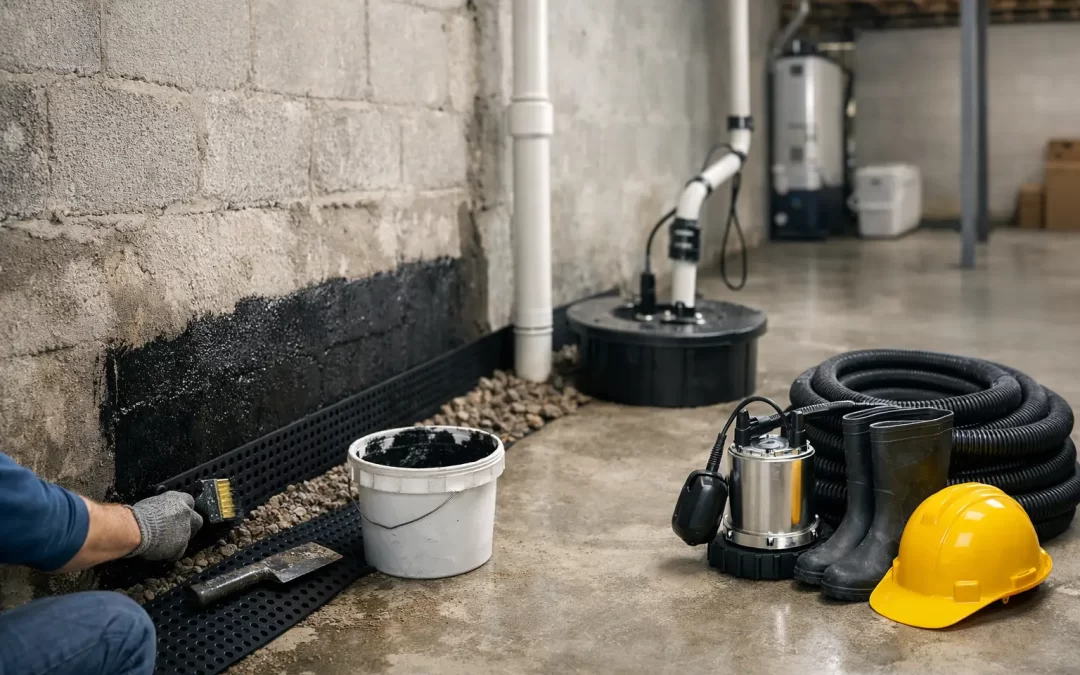
Interior waterproofing is often used when water is entering at the cove joint or through the lower wall area under pressure. This approach usually involves opening the slab perimeter, installing drainage channeling, and directing water to a sump pit where it can be pumped away safely. It manages water after it reaches the foundation wall and relieves pressure at the basement level.
The advantage is that interior systems can be highly effective without full excavation outside. They are often more practical for finished landscapes, tight access areas, or neighboring structures that make exterior excavation difficult. The limitation is that the wall itself remains exposed to exterior moisture. If the concrete is deteriorating, cracked, or structurally affected, interior drainage alone may not be enough.
Exterior waterproofing systems
Exterior waterproofing addresses water before it enters. This usually means excavating to expose the foundation, repairing cracks or defects, applying a waterproof membrane, installing protection board, and improving weeping tile or exterior drainage where needed.
Done properly, this is the more direct way to stop water from pressing against the wall. It also gives access to repair foundation defects from the outside. The trade-off is cost, disruption, and site conditions. Excavation is not always simple around decks, driveways, additions, utilities, or commercial structures.
Which one is better?
It depends on the failure point. If the main issue is a localized wall crack, targeted crack injection may solve it. If water is entering along the perimeter floor joint under pressure, an interior drain tile system may be the better fit. If the outside membrane has failed across a broader section and the wall needs direct repair, exterior work is often the right move. The best answer comes from identifying where the water starts and how the structure is performing.
Crack repair is not the same as waterproofing
This is where many property owners lose time. A basement crack can often be sealed with epoxy or polyurethane injection, but the repair method has to match the crack behavior. Epoxy is used when structural bonding is needed. Polyurethane is typically used for active leaking cracks because it expands and seals against water.
That said, crack injection is not a cure-all. If the crack is part of broader settlement, lateral pressure, or ongoing water buildup around the foundation, sealing the crack without correcting drainage can lead to recurring problems nearby. Good repair work looks at both the symptom and the pressure causing it.
Drainage problems are often the real culprit
Many wet basements start outside the wall, not inside it. Poor lot grading, short downspout discharge, broken weeping tile, clogged catch basins, and failing sump systems can all overwhelm a foundation. That is why drainage review is part of any serious waterproofing assessment.
If your sump pump runs constantly, fails during storms, or discharges too close to the house, the system may be undersized, poorly routed, or nearing failure. If your downspouts dump water right beside the wall, you are recycling the problem every time it rains. These are not cosmetic issues. They directly affect water pressure at the foundation.
What property owners should not do
Quick fixes are tempting when the basement is wet and the cleanup is urgent. But there are common mistakes that make the next repair harder.
Waterproof paint on the inside wall is one example. It can trap moisture, blister, and hide active seepage. Another is finishing over damp walls before the cause is fixed. That often leads to hidden mold, damaged insulation, and larger demolition later. Waiting is another costly choice. A small leak can turn into concrete deterioration, interior damage, and foundation movement if enough water cycles through the same area season after season.
A practical basement waterproofing guide for choosing the right repair
The right repair usually comes down to four questions. Where is the water entering? What is causing pressure at that location? Is the issue limited or widespread? And is there any sign that the foundation itself is moving or deteriorating?
For homeowners, the goal is usually clear: keep the basement dry and protect the home. For commercial and institutional properties, there is often a second layer involving lifecycle cost, operational disruption, safety, and maintaining structural assets. In both cases, the repair should fit the actual condition of the concrete and the drainage environment around it.
This is why experienced contractors do not hand out one standard solution. A leaking wall crack, a failed parking structure joint, and a saturated basement perimeter do not call for the same fix. Foundation Pros of Winnipeg has worked on these conditions long enough to know that durable results come from matching the method to the problem, not forcing the problem to fit the method.
When to call for an inspection
If you have active seepage, recurring dampness, visible foundation cracks, bowing walls, water after snowmelt, or musty basement air that never really goes away, it is time to get the basement assessed. The same applies if you are seeing concrete scaling, rust staining, or signs that the slab and wall joint is letting in moisture.
Early action matters because water damage compounds. What starts as a leak can become mold, rot, damaged finishes, structural movement, or a much larger waterproofing scope. A proper inspection should tell you not just where the water is showing up, but why it is happening and what level of repair makes sense.
A dry basement is not about patching symptoms and hoping for the best. It is about finding the pressure point, fixing the failure, and putting the right drainage and repair strategy in place before the next wet season tests the structure again.