
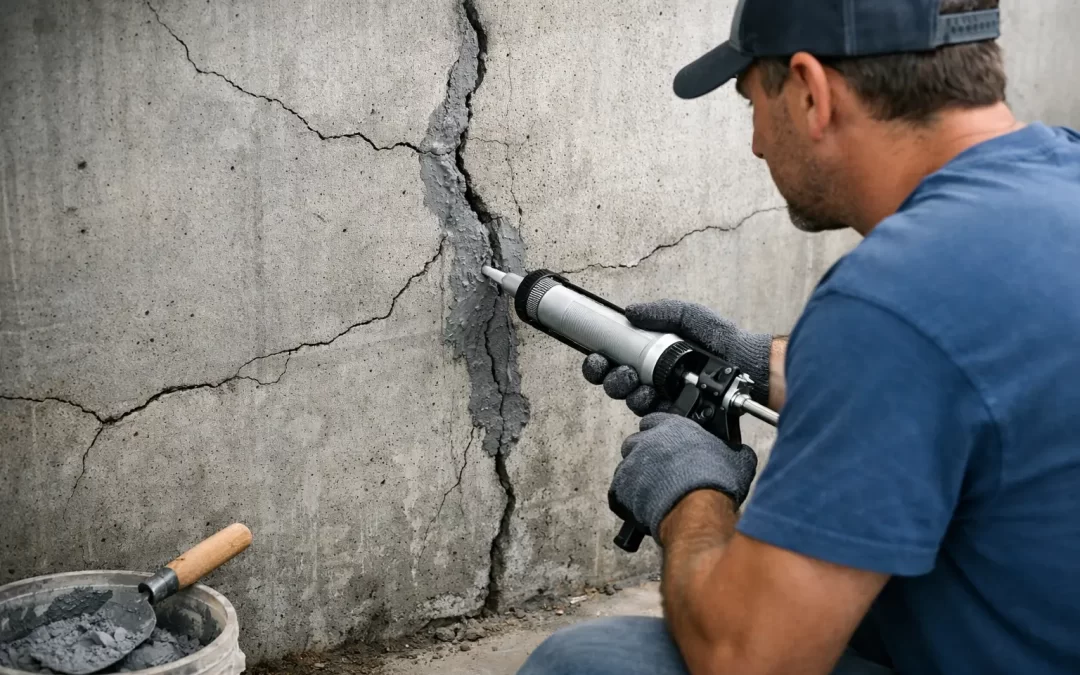
A hairline crack in a basement wall can look minor right up until the next heavy rain leaves water on the floor. That is usually how this starts. If you are searching for how to repair foundation cracks in concrete walls, the first thing to understand is that the repair method depends on what caused the crack, how wide it is, and whether the wall is moving.
Some cracks are mostly a water entry problem. Others point to settlement, lateral soil pressure, frost movement, or ongoing structural stress. Treating every crack the same way is where homeowners waste money. A surface patch might hide the line for a few months, but it will not stop movement or water infiltration if the underlying issue is still active.
How to repair foundation cracks in concrete walls the right way
The right repair starts with identification. In poured concrete walls, narrow vertical cracks are often tied to shrinkage or minor settlement. Horizontal cracks, stair-step cracks in block walls, and any crack that shows bowing, displacement, or repeated leaking deserve more caution. In Winnipeg and across regions with clay-heavy soils and freeze-thaw cycles, foundation movement is not theoretical. It is common, and small warning signs can turn into major repairs if they are ignored.
Before doing anything, inspect the crack carefully. Look at the direction, width, length, and whether one side of the wall is pushed inward or outward. Check for water staining, efflorescence, damp insulation, peeling paint, mold odor, or damage to finished basement materials. If doors are sticking upstairs or floors are sloping, the crack may be part of a larger settlement problem.
If the crack is actively leaking, wider than about one-eighth inch, growing over time, or paired with wall movement, this is usually not a simple DIY fix. The repair needs to address both the opening in the concrete and the force causing it.
When a crack can be repaired from the inside
Many non-structural or low-movement cracks in poured concrete can be repaired from the interior with injection methods. This is common when the main issue is water seepage through an isolated vertical crack.
Epoxy injection is used when the goal is to restore structural continuity in a crack that is dry and not actively moving. Polyurethane injection is often chosen when water infiltration is the main concern because it expands into the crack path and helps seal against moisture entry. Both systems require proper surface preparation, installation ports, and controlled injection pressure. If the wall is finished, access and hidden moisture can complicate the work.
The biggest mistake homeowners make is using caulk, hydraulic cement, or store-bought patch products as the first and only repair. Those materials can work as temporary stopgaps on some minor seepage points, but they do not travel deep into the crack. If water is moving through the full wall thickness, a shallow patch often fails.
For a small, dry, non-moving crack in an unfinished poured concrete wall, a careful homeowner may attempt a repair kit. The wall needs to be clean, the crack needs to be dry if epoxy is used, and the manufacturer instructions matter. But this only makes sense when the crack has already been judged low-risk. If there is any doubt about movement, leaking, or pressure from outside soil, it is better to have it assessed first.
Basic repair steps for a minor poured-wall crack
Start by cleaning the area so the repair material can bond properly. Dust, paint, efflorescence, and loose concrete all interfere with adhesion. Mark the visible length of the crack and check whether it extends behind framing or finishes.
If using an injection system, surface ports are installed along the crack and the face is sealed between ports. Once that surface seal cures, the material is injected from the lowest port upward until the crack is filled. After curing, the ports can be removed and the surface ground smooth if needed.
That sounds simple on paper, but good results depend on knowing whether the crack is stable, selecting the right material, and making sure the crack is fully filled. Partial filling leaves hidden leak paths.
When the repair needs more than a crack filler
Not every foundation crack should be sealed and forgotten. If the wall is under pressure from expanding soil, poor drainage, hydrostatic pressure, or settlement, the crack is a symptom. The proper repair may include exterior waterproofing, drainage correction, grading improvements, underpinning, wall reinforcement, or partial reconstruction.
Horizontal cracks are a good example. In poured concrete walls, a horizontal crack can mean the wall is being pushed inward by saturated soil. In block foundations, stair-step cracking often points to movement that needs structural review. If you simply inject the crack but do nothing about water pressure outside the wall, the problem can return in a different form.
The same goes for recurring leaks at the cove joint, window wells that fill with water, downspouts dumping next to the house, or a sump system that is undersized or failing. Crack repair works best when the site conditions are also corrected.
Signs you should call a foundation repair specialist
Some conditions move this out of the DIY category fast. A professional inspection is the safer move if you notice:
- horizontal cracking
- bowing or bulging walls
- cracks wider than one-eighth inch
- repeated water entry from the same area
- multiple cracks in the same wall
- settlement symptoms elsewhere in the building
- crumbling concrete, exposed rebar, or spalling
For commercial and institutional properties, the threshold for professional evaluation should be even lower. What looks like a localized crack can tie into broader deterioration, loading issues, or long-term moisture intrusion affecting structural concrete and interior finishes.
Interior repair versus exterior repair
Homeowners often ask whether foundation cracks should be repaired from the inside or outside. The honest answer is that it depends on the problem you are solving.
Interior crack injection is efficient and less disruptive when the wall itself is otherwise sound and the crack is the main water path. It is often the most practical fix for isolated poured-wall cracks.
Exterior repair is usually considered when waterproofing has failed more broadly, when there is drainage stone or membrane work needed, when the crack is tied to outside deterioration, or when you need to relieve water pressure at the source. Excavation costs more and involves more labor, but in some cases it is the only repair that truly addresses the root cause.
An experienced contractor will not push one method for every property. The right plan comes from the wall condition, site drainage, soil behavior, and leak history.
How local conditions make crack repair more complicated
In Manitoba and similar cold-climate regions, foundation walls take a beating. Clay soils expand and shrink with moisture changes. Freeze-thaw cycling stresses weak areas. Snowmelt and heavy rain increase hydrostatic pressure around below-grade walls. That is why a crack that stayed dry for two years can suddenly start leaking after one wet season.
This local context matters because a repair that might hold in a stable, dry environment may not last where soil movement is ongoing. Foundation Pros of Winnipeg deals with these conditions regularly, and that is exactly why crack repairs should be matched to the site instead of treated like a generic concrete patch job.
What a good repair should accomplish
A proper foundation crack repair should do more than make the wall look better. It should stop water entry, restore integrity where needed, and fit into a broader plan for keeping the wall stable over time.
That may mean combining crack injection with exterior grading corrections. It may mean adding drainage improvements and a sump solution. In more serious cases, it may mean structural reinforcement or settlement correction before cosmetic repairs happen.
Good contractors explain those trade-offs clearly. Sometimes the lower-cost repair is enough. Sometimes it only delays a larger failure. The difference is diagnosis.
Preventing the next crack
No foundation wall is promised a crack-free life, but you can reduce the risk of future damage. Keep downspouts discharging away from the building. Maintain proper grading so water drains away from the foundation. Watch for pooling near basement walls, overflowing eavestroughs, and signs of seasonal movement. If a crack has been repaired, monitor it. A simple pencil mark and date beside the crack can tell you whether it is changing.
Basement humidity control also matters. Moisture problems often show up gradually through musty smells, stained baseboards, and damp storage areas before a visible leak appears. Acting early is almost always cheaper than replacing finished walls, flooring, and damaged contents later.
If you are dealing with a visible crack now, do not wait for the next storm to tell you how serious it is. The best repair is the one that matches the cause, stops the water, and prevents the problem from spreading into a bigger structural or restoration project.