
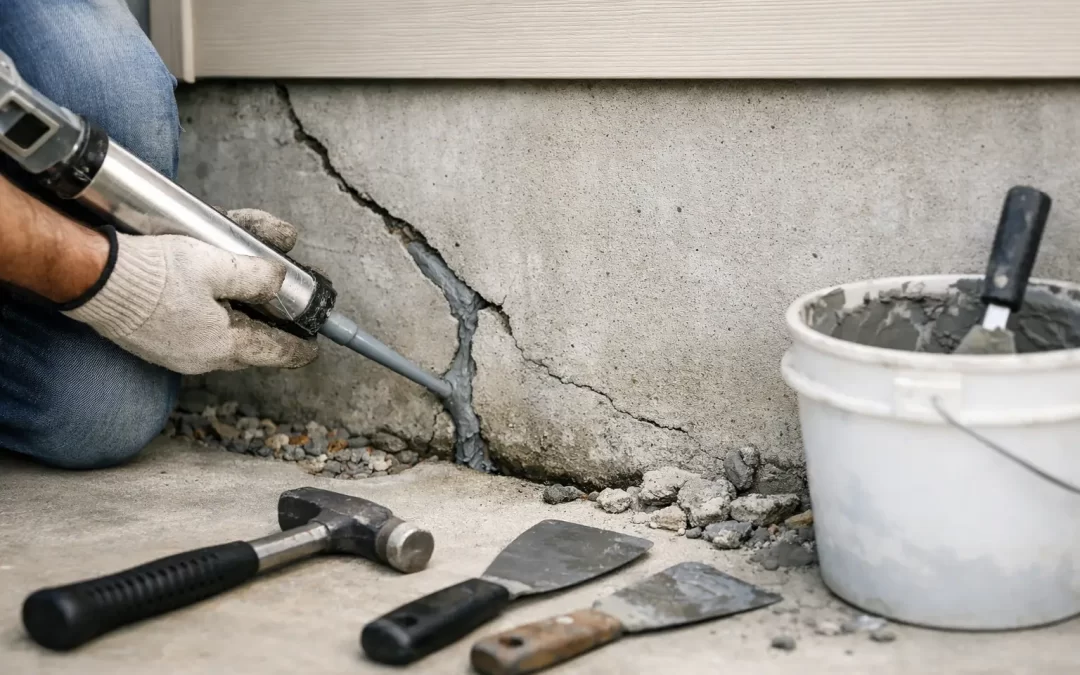
A foundation crack rarely stays the same for long. What starts as a hairline line in a basement wall can turn into water seepage, mold, wall movement, and bigger structural repair costs after one wet season or one hard freeze-thaw cycle. If you are searching for how to repair house foundation crack problems, the first thing to know is this: the right repair depends on why the crack formed, what the wall is made of, and whether the crack is active or stable.
In Winnipeg and similar cold-climate regions, foundations take a beating from shifting clay soils, hydrostatic pressure, frost movement, and repeated moisture exposure. That is why a cosmetic patch is often the wrong fix. You need to identify the cause before choosing the method.
How to repair house foundation crack the right way
There is no single product that fixes every foundation crack. A vertical shrinkage crack in poured concrete is a different problem than a stair-step crack in a block wall, and both are different from a horizontal crack caused by lateral soil pressure. Good repair work starts with diagnosis, not sealant.
If the crack is non-structural and not leaking, a low-pressure epoxy or polyurethane injection may be enough. If water is coming through, the better option is often a flexible polyurethane injection because it can follow minor movement and seal active moisture paths. If the wall is displaced, bowing, or settling, injection alone will not solve the problem. That usually calls for structural reinforcement, exterior waterproofing, underpinning, or drainage correction.
This is where homeowners often lose time and money. They buy a tube of masonry filler, cover the visible line, and assume the issue is handled. Meanwhile, water pressure outside the wall keeps building and the crack keeps moving behind the patch.
Start by figuring out what kind of crack you have
The crack pattern tells you a lot. Vertical cracks in poured concrete walls are common and are often related to shrinkage or minor settlement. They can still leak, but they are not automatically a major structural issue. Diagonal cracks can point to settlement, especially if one side of the wall has dropped. Horizontal cracks are more serious because they often mean the wall is under pressure from expanding soil or water-saturated backfill.
Block foundations need extra attention. Stair-step cracks through mortar joints can indicate movement, settlement, or lateral pressure. Because block walls have hollow cores and more joints than poured concrete, they are generally more vulnerable to water entry and structural movement.
Width matters too. A hairline crack may only need monitoring or sealing. A wider crack, especially one that changes over time, deserves a professional assessment. If doors are sticking, floors are sloping, drywall is cracking upstairs, or the wall is visibly bowed, you are no longer dealing with a simple surface issue.
When a DIY repair makes sense
Some small cracks can be repaired by a homeowner, but only in limited situations. If the crack is very narrow, vertical, stable, and not tied to visible movement, a basic repair may help prevent moisture entry for a while. Surface preparation matters. You need a clean, dry area and a product suited to concrete crack sealing, not a random caulk from the garage shelf.
Even then, DIY work is usually best for minor, non-structural cracks that are easy to monitor. It is not the right move for repeated leaking, widening cracks, multiple crack patterns, or any wall showing displacement. A do-it-yourself patch can hide warning signs and delay the real repair.
For homeowners, the biggest risk is treating a structural or drainage problem as a sealing problem. If water is forcing its way through the wall, the crack itself may not be the only issue. Poor grading, failed weeping tile, clogged drainage, high groundwater, or pressure from expansive clay soil may be driving the damage.
Professional repair methods and when they are used
For poured concrete walls, crack injection is one of the most common repair methods. Epoxy injection is used when structural bonding is needed and the crack is dry and stable. It essentially glues the concrete back together. Polyurethane injection is better for active leaks because it expands into the crack path and creates a water-resistant seal. One is not always better than the other. It depends on whether the problem is structural, moisture-related, or both.
Exterior excavation and waterproofing may be needed when the wall has chronic leaking, deteriorated exterior membranes, or heavy hydrostatic pressure. This approach addresses the problem from the outside by exposing the wall, sealing it properly, and improving drainage conditions. It is more disruptive and more expensive than injection, but in the right situation it is the more complete repair.
If settlement is involved, crack repair alone will not stabilize the house. The foundation may need underpinning or another form of structural correction to transfer loads more effectively and stop continued movement. If the wall is bowing inward, reinforcement systems such as wall anchors or carbon fiber may be part of the solution. Again, it depends on the wall type, degree of movement, and soil conditions around the foundation.
Water is often the real enemy
A lot of foundation cracks become urgent because of water. Once moisture starts entering the basement, the problem spreads beyond concrete. Insulation gets wet, finishes are damaged, stored contents are ruined, and air quality starts to suffer. In many basements, that is when homeowners notice the crack, but the underlying issue has already been developing for months or years.
That is why repair planning should include drainage. Downspouts, grading, sump pump performance, exterior drainage systems, and water accumulation around the footing all matter. If those conditions are ignored, even a technically sound crack repair may be put under unnecessary stress.
In clay-heavy regions, seasonal soil movement adds another layer of pressure. Wet clay expands. Dry clay shrinks. That cycle can push and pull on the foundation year after year. A contractor who understands local soil behavior will look beyond the wall itself and consider what is happening in the surrounding ground.
Signs you should not wait
Some cracks can be scheduled. Others need attention right away. If you see active water entry, white mineral staining, mold smell, widening gaps, cracked window corners, leaning walls, or repeated seepage after rain, do not leave it for next season. The same goes for any crack paired with floor movement or settlement symptoms elsewhere in the building.
Commercial and institutional properties have the same issue on a larger scale. Water intrusion, structural movement, and concrete deterioration can affect occupied spaces, equipment, and long-term maintenance budgets. Early repair is usually far less expensive than full restoration after conditions worsen.
What a proper assessment should include
A real inspection should look at more than the crack width. The wall material, crack direction, moisture pattern, drainage conditions, settlement history, and signs of movement elsewhere in the structure all matter. Photos over time can help show whether the crack is active. In some cases, elevation changes or wall deflection need to be measured.
The goal is to answer three questions. Is the crack structural, cosmetic, or water-related? What caused it? And what repair method will solve both the symptom and the source? Without those answers, repairs are mostly guesswork.
That practical approach is what separates short-term patching from durable repair work. Foundation Pros of Winnipeg has built its reputation on that kind of field-based diagnosis since 1995, especially in properties dealing with clay soil movement, basement leakage, and concrete deterioration that standard patch methods do not fix.
The cost of waiting is usually higher than the cost of repair
Many people put off foundation crack repair because they hope the crack is old or harmless. Sometimes it is. Often it is not. The problem is that foundations rarely repair themselves, and water never needs a large opening to create damage. A small crack with movement or seepage can become a much larger repair once finishes, framing, flooring, or structural elements are affected.
If you are trying to decide how to repair house foundation crack damage, treat the crack as a warning sign, not a surface defect. The right fix might be simple. It might involve drainage, injection, exterior waterproofing, or structural stabilization. What matters is getting the cause right before choosing the repair.
A crack in concrete is easy to ignore when it is dry and quiet. It gets much harder to ignore when the basement smells damp, the wall starts shifting, or the repair bill doubles. Getting it checked early is usually the most practical move you can make.