
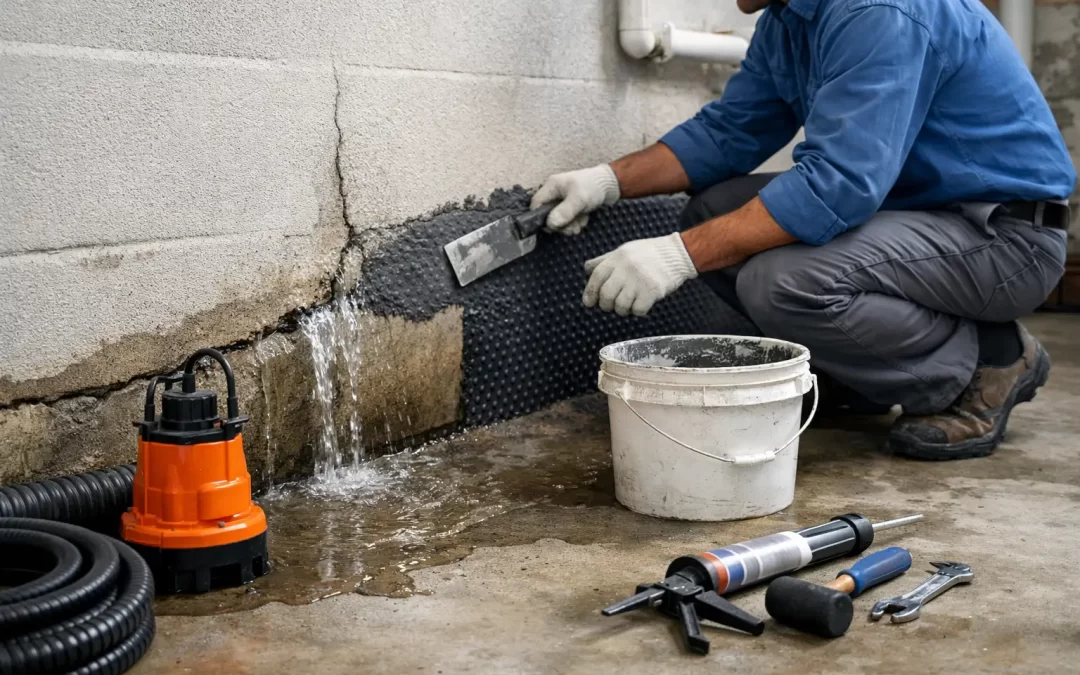
A basement usually tells you the truth before the rest of the house does. A damp corner, a white chalky stain on the wall, peeling paint, a musty smell after rain – these are early warnings. If you are trying to figure out how to stop basement water intrusion, the first step is not buying a dehumidifier or painting over the problem. It is finding out where the water is getting in, why it is happening now, and what repair actually matches the cause.
That matters because basement water is rarely a one-part problem. In many homes, especially where clay soils hold water and freeze-thaw cycles put pressure on concrete, intrusion happens because several things are going wrong at once. Poor grading adds surface water. Clogged or short downspouts dump roof runoff at the foundation. Small cracks open under movement. Old waterproofing breaks down. Then one heavy storm turns a manageable issue into damage to flooring, drywall, insulation, and stored contents.
How to stop basement water intrusion starts outside
Most wet basement problems begin before water ever touches the wall. If the ground around the house slopes toward the foundation, water will collect there. If eavestroughs overflow or downspouts discharge too close to the house, roof runoff will soak the soil along the footing. Once that soil is saturated, hydrostatic pressure builds and pushes moisture through cracks, joints, pores in the concrete, and around service penetrations.
Start with the basics. The grade should slope away from the house, not toward it. Low areas beside the foundation should be built up with compacted fill, not loose topsoil that settles after one season. Downspouts should carry water well away from the building. Gutters should be clear and sized to handle runoff during heavy rain.
These sound simple, and sometimes they are enough. But there is a limit to what surface fixes can do. If water is entering through a failed wall crack, a cold joint, a tie-rod hole, or a deteriorated block wall, better grading helps but does not solve the entry point itself.
Know the difference between moisture and active intrusion
Homeowners often use one term for everything, but there is a real difference between humidity, condensation, seepage, and active leakage. That difference affects the repair.
Condensation forms when warm indoor air hits a cool surface. It can make a basement feel damp without outside water passing through the foundation. Seepage is slower and often shows up as darkened concrete, staining, or minor dampness along the cove joint where the wall meets the floor. Active intrusion means bulk water is coming in through a crack, joint, window well, pipe penetration, or floor opening.
If the basement gets wet only during humid summer weather, you may be dealing partly with indoor air conditions. If water appears only after rain or spring melt, that points more directly to drainage or foundation entry points. If the problem gets worse during prolonged wet periods, hydrostatic pressure is likely involved.
A good inspection looks at timing, location, wall condition, floor condition, exterior drainage, and any signs of structural movement. Guessing usually leads to wasted money.
The most common entry points for basement water
When people ask how to stop basement water intrusion, they often expect one product or one service. In practice, the right answer depends on where the water is entering.
Foundation cracks are one of the most common trouble spots. Some are shrinkage cracks and stay stable. Others widen with settlement, soil pressure, or seasonal movement. If a crack is leaking, the repair should seal the full water path, not just the visible surface.
The cove joint is another frequent source. This is the joint where the wall meets the floor slab. Water can appear here when pressure builds below the slab or along the footing. In that case, the wall itself may be sound while groundwater is still forcing its way into the basement.
Basement windows and window wells can also fail. If the well fills up because of poor drainage or snow and rain buildup, water can work in around the frame. Older mortar joints, utility penetrations, and porous concrete surfaces can all contribute as well.
In block foundations, water can travel inside the hollow cores and show up far from where it started. That is one reason the wet spot you see is not always the real source.
Interior fixes vs exterior waterproofing
This is where trade-offs matter. Interior drainage systems, crack injections, sump pumps, and vapor management can be very effective, but they do not all do the same job. Exterior excavation and waterproofing address water before it enters, but they are more invasive and cost more.
An interior crack injection is often a strong solution for an isolated leaking crack in a poured concrete wall. A properly installed polyurethane or epoxy injection can stop water at the crack path. But if the wall has multiple cracks, deteriorated exterior waterproofing, or broader drainage failure, treating one crack may not be enough.
Interior drainage systems help manage water that reaches the footing level. They collect and redirect it to a sump pump for discharge. These systems are practical when exterior access is limited or when hydrostatic pressure is pushing water in at the wall-floor joint. They control the symptom well, but they do not reduce exterior soil saturation.
Exterior waterproofing is the better fit when walls are accessible, coatings have failed, or water is entering through multiple below-grade defects. Excavation allows the wall to be cleaned, repaired, sealed, and protected, often with drainage improvements added at the same time. It is a more direct solution, but it is not always necessary on every project.
How to stop basement water intrusion for the long term
Long-term control usually means combining repairs instead of relying on one fix. A homeowner may need crack repair, downspout extensions, grading correction, and a sump system, not just one of those items.
That is especially true in regions where clay soils expand and contract. Soil movement can open cracks, shift drainage patterns, and increase pressure against foundation walls. Freeze-thaw conditions make matters worse by widening defects and stressing older concrete. If the house has already shown signs of settlement, wall movement, or recurring leaks, the repair plan should account for structural conditions too.
This is also why waterproof paint is so often a dead end. It can hide staining for a while, but it does not stop pressure from the outside. In some cases, it traps moisture in the wall and leads to peeling, flaking, or further deterioration. The same goes for quick patch materials applied to active leaks without proper preparation or diagnosis.
A durable solution starts with controlling water at the source, relieving pressure where needed, and sealing actual entry points with methods suited to the wall type and failure condition.
When basement water means a bigger foundation problem
Not every wet basement is a structural emergency, but some are. Horizontal cracking, stair-step cracking in masonry, bowing walls, slab heave, and repeated crack reopening can point to more than just a leak. If water intrusion is tied to movement, then waterproofing alone may not hold up.
Commercial and institutional properties face the same issue on a larger scale. Parking structures, utility rooms, and below-grade walls often deal with water and concrete deterioration at the same time. Once reinforcing steel starts to corrode or concrete begins to delaminate, the repair scope changes. Moisture control becomes part of a broader restoration plan.
That is why experienced contractors look at the whole assembly, not just the wet spot. At Foundation Pros of Winnipeg, that practical, field-based approach matters because no two basements fail in exactly the same way.
What to do next if your basement is already leaking
If water is actively entering, move contents away from the area and document where it shows up and under what weather conditions. Do not finish over it, and do not assume the problem is minor because the amount seems small. Water problems usually get more expensive with time, not cheaper.
Check the easy exterior issues first. Make sure gutters are clear, downspouts are extended, and the grade does not trap water at the wall. Then have the foundation, crack pattern, drainage conditions, and sump setup assessed by a contractor who deals specifically with basement water and structural concrete issues.
The goal is not to sell the biggest repair. The goal is to stop the actual path of intrusion and keep it from coming back. Sometimes that is a targeted crack repair. Sometimes it is an interior drainage system. Sometimes the right answer is exterior excavation and waterproofing because the wall needs to be repaired from the outside.
A dry basement is not just about comfort. It protects the structure, indoor air quality, finishes, and resale value. More than that, it gives you a clear answer before a small leak turns into rotten framing, mold growth, or a foundation problem that costs far more to fix later. If your basement is showing early signs now, this is the time to deal with it while the repair is still straightforward.