
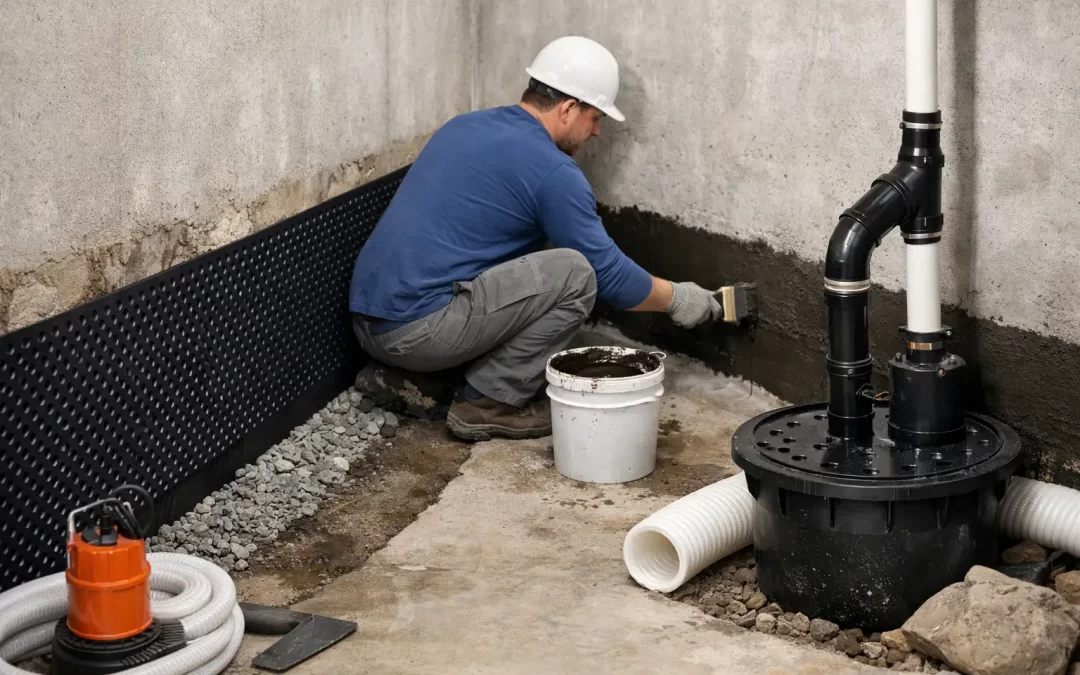
A basement rarely starts with a major flood. More often, it starts with a damp corner, a musty smell, a white chalky stain on the wall, or a hairline crack that keeps getting ignored. By the time water is pooling on the floor, the repair is usually bigger and more expensive. That is why choosing the best basement waterproofing methods matters early, before moisture turns into mold, concrete damage, or structural movement.
In Winnipeg and similar cold-climate regions, basement leaks are rarely caused by one issue alone. Water pressure against the foundation, poor grading, clogged weeping tile, shifting clay soils, freeze-thaw cycles, and cracked concrete often work together. A good waterproofing plan deals with the source of the water, not just the symptom you can see inside.
What makes the best basement waterproofing methods work
The best basement waterproofing methods are the ones matched to the actual failure point. That sounds obvious, but it is where many repairs go wrong. Homeowners often start with paint-on coatings or a dehumidifier because they are cheaper upfront. Those products may help with minor humidity, but they do not stop hydrostatic pressure, exterior water buildup, or active seepage through cracks and wall-floor joints.
A proper solution starts with diagnosis. Is water coming through a shrinkage crack, over the top of the foundation wall, through porous concrete, around service penetrations, or up from below the slab? Is the drainage system overloaded or collapsed? Has settlement changed the slope around the house? Each condition points to a different repair strategy.
Exterior waterproofing is often the strongest long-term fix
If water is entering through foundation walls, exterior waterproofing is usually the most complete method because it stops water before it reaches the concrete. This repair typically involves excavating the affected wall, cleaning the foundation surface, repairing cracks or deteriorated areas, applying a waterproof membrane, and installing or replacing drainage board and weeping tile if needed.
This is the approach many contractors prefer when there is significant wall seepage, repeated leaking, or visible exterior foundation deterioration. It addresses the problem at the source. It also reduces hydrostatic pressure against the wall, which matters if the concrete is already showing stress.
The trade-off is cost and access. Excavation is more disruptive than an interior system. Landscaping, decks, walkways, or tight property lines can complicate the work. But when exterior conditions are the real cause, covering the inside wall without fixing the outside usually just delays the next leak.
When exterior excavation makes the most sense
Exterior waterproofing is often the best choice when water is coming through multiple points on one wall, when foundation cracks extend below grade, or when the original damp-proofing has failed after years in the ground. It is also a strong option when a property already has excavation planned for other foundation repairs.
For commercial and institutional buildings, it can be especially important where long wall runs or below-grade occupied spaces make interior water management less practical.
Interior drainage systems control water when exterior access is limited
Not every leaking basement needs full excavation. Interior drainage systems are one of the best basement waterproofing methods when exterior access is difficult, the leak is occurring at the cove joint, or groundwater is rising beneath the slab. In this method, a drainage channel is installed along the inside perimeter of the basement floor to collect water and direct it to a sump pit for discharge.
This system does not block water on the outside of the wall. Instead, it gives that water a controlled path so it does not build up under the floor or spill across the basement. In many wet-basement cases, that is a practical and durable solution.
Interior systems are less invasive outside and can often be installed faster than excavation. They are commonly paired with vapor barriers on the interior wall and a reliable sump pump setup. The catch is that they manage intrusion rather than prevent the wall from getting wet from the exterior side. If the foundation itself is deteriorating, drainage alone may not be enough.
Crack injection is effective for specific leaks
A poured concrete wall with a single leaking crack does not always need full waterproofing around the entire house. If the issue is isolated and the wall is otherwise sound, crack injection can be a targeted fix. Polyurethane injection is often used for active water infiltration because it expands into the crack path and helps seal against further leakage. Epoxy injection may be used when structural bonding is needed, although it is not always the right choice for active movement or wet conditions.
The key is knowing whether the crack is just a water entry point or part of a bigger settlement or pressure problem. If the crack is widening, offset, or accompanied by wall bowing, repeated patching is not a real solution. The leak may stop for a while, but the structural issue remains.
Why surface patching usually fails
A basement wall crack that leaks under pressure cannot usually be fixed with a simple cement patch on the inside. Surface materials do not reach the full depth of the crack, and water often finds the path around them. That is why professional crack repair focuses on sealing the actual channel where water is traveling.
Sump pumps matter more than many homeowners realize
A sump pump is not a luxury item in a high-water area. It is a core part of a basement waterproofing system when water has to be collected and discharged away from the foundation. If your home has interior drainage, a low basement elevation, seasonal groundwater issues, or a history of spring flooding, the sump pump becomes one of the most important pieces of equipment in the house.
A good setup includes the right pump capacity, a properly sized basin, a discharge line that routes water well away from the home, and backup protection in case of power failure or pump malfunction. Too many wet basements happen because the pump was undersized, poorly maintained, or installed without thinking through winter freeze conditions.
For property managers and commercial owners, sump reliability is even more critical. One failed pump can damage finishes, equipment, stored materials, and occupied space very quickly.
Exterior grading and drainage should never be treated as secondary
Some of the best basement waterproofing methods are not even on the foundation wall itself. If the ground slopes toward the building, downspouts discharge beside the footing, or surface water is trapped near the structure, you are constantly feeding the problem.
Correcting grade, extending downspouts, improving swales, and managing roof runoff can dramatically reduce water loading around a basement. These are not glamorous repairs, but they are often the first things we look at because they influence everything else. If surface drainage is wrong, even a well-sealed foundation can stay under unnecessary pressure.
This is also where local soil conditions matter. Expansive clay soils hold water, swell, and put added stress on the foundation. Then dry periods can cause shrinkage and movement. Waterproofing in those conditions is not just about sealing concrete. It is about controlling how water behaves around the building year-round.
Coatings and sealers have a place, but they are not a cure-all
Homeowners are often sold interior waterproof paint as a simple answer. In reality, coatings and sealers are limited tools. They can help with minor dampness, reduce vapor transmission, and improve surface resistance on sound masonry. They do not relieve pressure behind the wall, repair drainage failure, or stop active leaks moving through cracks and joints.
That does not mean they are useless. Used as part of a broader system, they can support moisture control. Used alone on a leaking basement, they often create false confidence.
The right method depends on the basement, not the sales pitch
There is no single best basement waterproofing method for every property. A finished basement with recurring floor-edge seepage may need interior drainage and a sump upgrade. A home with one active wall crack may need injection repair. A building with wall-wide leakage and failed exterior protection may need excavation and a full waterproofing membrane. In some cases, the best result comes from combining methods.
That is where experience matters. The goal is not to sell the biggest job. The goal is to identify how water is entering, what the foundation is dealing with structurally, and which repair will actually hold up through heavy rain, spring melt, and freeze-thaw cycles.
At Foundation Pros of Winnipeg, that kind of diagnosis is the difference between a short-term patch and a repair plan that protects the building. If your basement smells damp, shows staining, or has started leaking even once, it is worth getting it looked at before the next season makes the decision more expensive. A dry basement starts with the right fix, not the fastest one.