
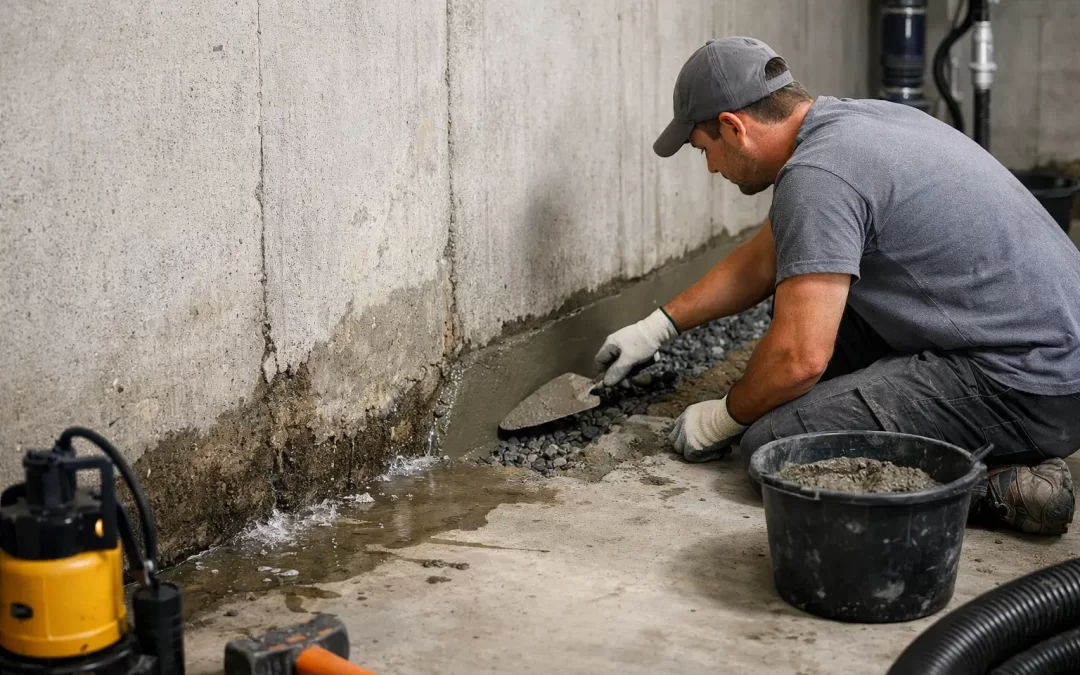
A damp corner after heavy rain is easy to ignore. A musty smell, peeling paint, or water staining along the wall feels less urgent than a flooded basement. But that is usually how bigger foundation moisture problems start. If you are trying to figure out how to fix basement seepage, the first step is understanding that seepage is rarely just a surface issue. Water is getting in for a reason, and the right repair depends on where that water is coming from and what it is doing to the foundation.
What basement seepage usually means
Basement seepage is not always a dramatic leak. In many homes, it shows up as damp walls, wet floor edges, white chalky residue on concrete, dark spots, or a smell that never really goes away. In commercial and institutional buildings, the signs can be more subtle at first – moisture staining, spalled concrete, rusting steel, failed coatings, or floor slab dampness.
The common factor is that water is moving through or around the foundation system when it should be directed away from it. In a place with clay-heavy soils, freeze-thaw cycles, and periods of heavy runoff, that pressure can build quickly. Once water starts finding a path through cracks, porous concrete, wall-floor joints, or service penetrations, the problem tends to keep returning until the cause is addressed.
How to fix basement seepage starts with the source
There is no single repair that works for every wet basement. Paint-on waterproofing products, dehumidifiers, and quick crack fillers all have their place, but they do not solve every type of seepage. A proper fix starts with diagnosis.
Check where and when the water appears
If seepage happens only after heavy rain, surface drainage may be the main issue. If the basement stays damp year-round, groundwater pressure, poor perimeter drainage, or chronic wall penetration may be involved. If water is showing up at the base of the wall, that often points to hydrostatic pressure or a failed wall-floor joint. If it is entering through a visible crack, the repair needs to address that crack directly, not just the symptoms around it.
The timing matters too. Spring melt, long summer storms, and freeze-thaw transitions can all reveal different weaknesses in the foundation system.
Inspect the exterior before touching the interior
A lot of seepage starts outside. Downspouts that dump water near the foundation, negative grading, settled soil beside the house, blocked weeping tile, and hard surfaces that slope toward the building can all overload the wall.
If the ground around the home funnels water inward, interior repairs alone may not hold up. The simplest correction may be regrading soil, extending downspouts, or changing runoff patterns. In more serious cases, excavation and exterior waterproofing are the right call.
Look for cracks, joints, and weak points
Not every foundation crack leaks, but any crack that allows moisture through should be assessed. Vertical shrinkage cracks may be repairable with injection. Horizontal cracking, step cracking, or bowing can point to structural movement and requires a different level of attention. The joint where the wall meets the floor is another frequent entry point because water under pressure will follow the easiest path.
Pipe penetrations, old tie holes, deteriorated parging, and porous block walls can also let moisture in. A good repair plan targets the exact path water is taking.
Interior fixes that work – and when they do not
Interior repairs are often the fastest way to control active seepage, especially when full excavation is not practical. But they need to be used for the right conditions.
Crack injection for leaking foundation walls
If seepage is coming through a specific concrete crack, polyurethane or epoxy injection can be an effective repair. Polyurethane is commonly used for active leaks because it expands into the crack path and helps block water movement. Epoxy is more about structural bonding when the crack is dry and stable.
This is not a one-size-fits-all decision. If the crack is moving, widening, or tied to settlement, injection alone may not be enough.
Interior drainage systems and sump solutions
When hydrostatic pressure is forcing water to the wall-floor joint or up through the slab, an interior drainage system can be the most reliable control method. This approach collects water below the floor and directs it to a sump pit where it can be pumped away from the building.
For many basements, this is the practical answer when exterior access is limited or when groundwater conditions stay aggressive. The key is proper design, proper discharge, and a sump pump system sized for the property. A weak or poorly installed system just moves the problem around.
Surface sealers are not a repair plan
Waterproof paints and masonry sealers can help with minor vapor transmission, but they are not a cure for active seepage. If water pressure is pushing through the wall, a coating usually fails sooner or later. It may even hide the warning signs while moisture keeps damaging the concrete behind it.
That is why cosmetic fixes should never be mistaken for real waterproofing.
Exterior repairs are often the long-term answer
When water is entering because the outside of the foundation is overloaded, exterior work usually gives the most complete result.
Excavation and exterior waterproofing
This method exposes the foundation wall from the outside so damaged areas can be repaired directly. Cracks can be sealed, the wall can be waterproofed with a proper membrane, and drainage board can be added to help relieve water pressure. If the existing footing drain has failed, this is also the time to address it.
Exterior waterproofing costs more and involves more disruption, but it solves the problem at the source. For severe or recurring seepage, that matters.
Grading and water management
Sometimes the fix is not deep excavation. It is correcting the way water behaves on the lot. Soil should slope away from the building. Downspouts should discharge well away from the foundation. Window wells need proper drainage. Driveways, walkways, and patios should not trap runoff against the house.
These may sound like small issues, but they create big problems over time. A basement can stay wet simply because thousands of gallons of roof runoff are being dropped in the wrong place.
When seepage is more than a moisture issue
Some wet basement problems are tied to structural movement. Expansive clay soils, settlement, frost action, and repeated moisture cycling can all stress the foundation. When that happens, seepage is not just about keeping water out. It is also about protecting the building from further cracking, wall displacement, and slab damage.
That is where experience matters. A contractor should be able to tell the difference between a repairable moisture entry point and a warning sign of a larger foundation issue. Foundation Pros of Winnipeg has worked on both sides of that problem since 1995 – stopping water intrusion and addressing the concrete and structural failures that often come with it.
How to fix basement seepage without wasting money
The expensive mistake is paying for the wrong repair first. Homeowners often start with the least disruptive option, which is understandable. But if the source is outside pressure and failed drainage, an interior patch will not give a lasting result. On the other hand, some seepage issues do not need full excavation if a targeted crack repair or interior drainage system will solve them properly.
It depends on the building, the soil conditions, the foundation type, and the path the water is taking. Good repair planning is about matching the method to the failure, not selling the same system every time.
If you are seeing repeated dampness, staining, musty odors, bubbling paint, or visible cracks, waiting usually makes the repair scope larger. Moisture leads to mold risk, damaged finishes, weaker concrete surfaces, and more difficult restoration later. In commercial settings, it can also affect tenant spaces, equipment, and long-term maintenance budgets.
What to do next if your basement is seeping
Start by documenting where the water appears and what weather conditions trigger it. Check the grading, gutters, and downspout discharge outside. Look for cracks, staining, and moisture paths inside. Then get the foundation assessed by someone who handles seepage as a repair problem, not just a cleanup problem.
A dry basement is not about covering up symptoms. It is about stopping water entry in a way that fits the actual condition of the foundation. If you act early, you usually have more repair options, less damage to undo, and a better chance of keeping a moisture problem from turning into a structural one.
The best time to deal with seepage is when it still looks manageable, because that is often right before it stops being manageable.