
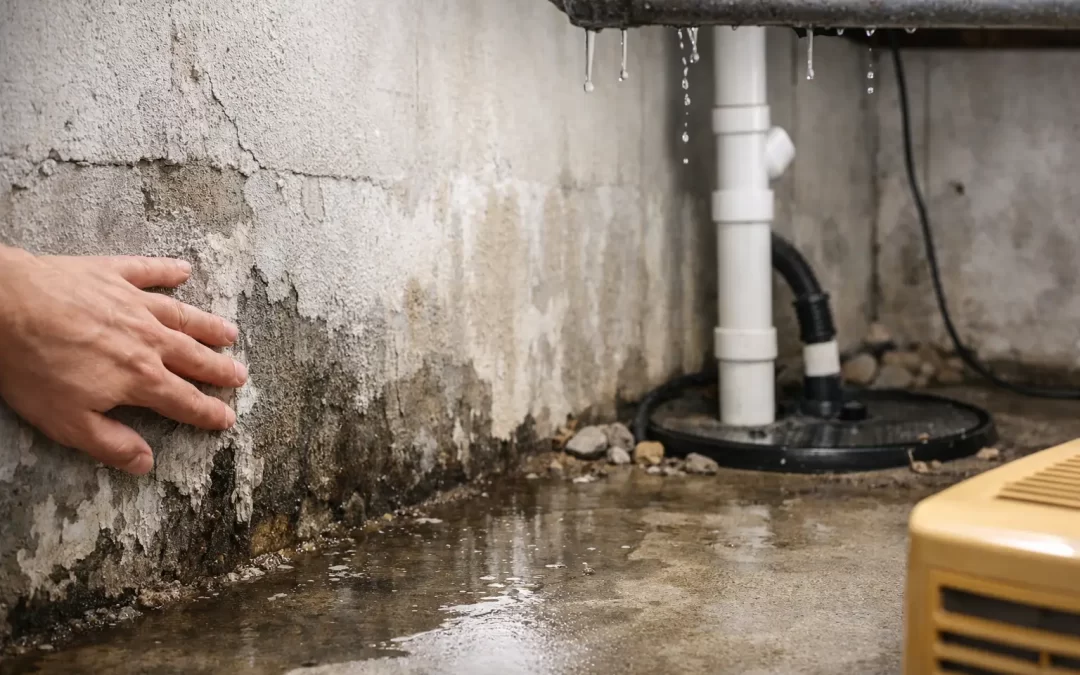
A basement does not get damp for no reason. If you’re asking, “why is my basement damp,” the answer is usually a moisture problem that has already started working its way through the house from the outside in. Sometimes it shows up as a musty smell. Sometimes it’s damp walls, peeling paint, stained concrete, or water at the cove joint where the floor meets the wall. In colder climates, it can start small and turn expensive fast.
The biggest mistake property owners make is treating dampness like a minor nuisance. A dehumidifier may help with the symptom, but it will not fix poor drainage, foundation cracking, hydrostatic pressure, or outside grading that sends water straight toward the house. If the moisture source is left alone, the damage usually spreads.
Why is my basement damp in the first place?
Most damp basements are caused by one of three things – interior humidity, water entering through the foundation, or drainage failures around the home. The hard part is that these issues can overlap.
In many homes, especially older ones, the basement walls are constantly exposed to wet soil. When the ground around the foundation holds water, pressure builds against the concrete. Concrete is strong, but it is also porous. Over time, moisture can move through the wall, enter through cracks, or push in through weak points like tie holes, pipe penetrations, cold joints, and the floor-to-wall joint.
Sometimes the basement is not technically leaking, but it still feels damp because warm indoor air hits cool basement surfaces and condenses. That creates the same musty environment people associate with water intrusion. The difference matters because the fix for condensation is not the same as the fix for an active foundation leak.
Exterior drainage problems are often the real issue
If rainwater or snowmelt is not directed away from the home, the foundation ends up taking the hit. This is one of the most common reasons a basement stays damp.
Clogged gutters, short downspouts, and negative grading can all dump water beside the foundation. Once that soil becomes saturated, it creates constant moisture pressure against the basement wall. In heavy clay soils, the problem gets worse because water drains slowly and tends to sit against the house longer.
This is where many homeowners lose time and money. They paint basement walls, replace flooring, or run fans, but the outside drainage conditions never change. If water is pooling near the foundation, the inside of the basement will keep showing the effects.
Signs the outside of the home is causing basement dampness
You may notice dampness getting worse after rain, during spring thaw, or after long wet periods. Efflorescence on the walls, soft drywall near the floor, or recurring moisture in the same corner are all signs that exterior water is involved.
If the lawn slopes toward the house or downspouts discharge too close to the wall, that is not a minor housekeeping issue. It is often the start of a wet basement problem.
Foundation cracks and weak entry points
Not every damp basement comes with visible standing water. In many cases, moisture gets in through small cracks or construction joints and leaves behind subtle signs before the leak becomes obvious.
Shrinkage cracks, settlement cracks, and deteriorated wall penetrations can all let water through. A narrow crack may not look serious from across the room, but under enough outside pressure, it can become a direct path for seepage. The same goes for the cove joint, which is a common weak spot where the wall and slab meet.
This matters even more in climates with freeze-thaw cycles. Moisture enters, temperatures shift, materials expand and contract, and the opening can worsen over time. What starts as seasonal dampness can turn into ongoing infiltration and concrete deterioration.
When a crack is more than a cosmetic issue
Hairline cracks are not always structural emergencies, but they should not be ignored when moisture is present. If a crack is wet, stained, widening, or associated with bowing, displacement, or repeated leakage, it needs a proper assessment. Dampness plus movement is a different conversation than dampness alone.
High humidity and basement condensation
Sometimes the answer to “why is my basement damp” is partly inside the house. Basements are naturally cooler than upper floors, and when warm, humid air enters the space, it condenses on cool surfaces like concrete walls, pipes, and floors.
That can leave the air feeling clammy and create mold-friendly conditions even without a visible foundation leak. Laundry areas, poorly vented bathrooms, unsealed sump pits, and HVAC issues can all add moisture to the air.
The clue is usually in the pattern. Condensation problems tend to be more widespread and surface-level. You may see moisture on pipes, windows, or exposed concrete across multiple areas. Water intrusion from outside is more likely to appear in specific spots, especially near cracks, corners, or along the perimeter.
A dehumidifier can help control indoor humidity. But if the basement still smells musty or surfaces stay wet after humidity is reduced, there is usually a deeper source that needs to be addressed.
Drain tile and sump pump failures
A basement waterproofing system is only as good as its ability to move water away before it builds pressure. If the drain tile is blocked, damaged, or missing, water around the foundation has nowhere to go. If the sump pump fails, collected water can back up and contribute to damp conditions or outright flooding.
This is especially important in areas where groundwater levels rise seasonally. A basement can stay damp for months because the water management system is no longer doing its job.
Older properties may have partial drainage systems, outdated sump setups, or no effective waterproofing at all. Newer buildings are not automatically safe either. Poor installation, settlement, and maintenance issues can undermine the system over time.
Why damp basements get worse if you wait
Moisture is rarely a static problem. It affects more than comfort.
A damp basement can damage finished walls, flooring, insulation, wood framing, and stored contents. It can lead to mold growth and poor indoor air quality. Over time, ongoing saturation around the foundation can also contribute to crack growth, concrete breakdown, and settlement-related movement.
For commercial and institutional buildings, the stakes can be higher. Moisture intrusion can affect occupied spaces, building systems, tenant use, and maintenance budgets. Once concrete starts deteriorating or water reaches interior finishes, the repair scope expands.
Waiting makes diagnosis harder too. Temporary drying can hide symptoms without solving the source, which means the problem keeps cycling back. By the time the basement feels consistently wet, the repair is often larger than it would have been earlier.
What to check before the problem spreads
Start with the obvious exterior conditions. Look at the slope around the building, the length and placement of downspouts, and whether water is collecting near the foundation after rain. Then inspect the basement for warning signs like white mineral deposits, peeling paint, stained walls, damp corners, wet baseboards, or visible cracks.
Pay attention to timing. If the dampness gets worse after storms or snowmelt, exterior water is likely involved. If it shows up during hot, humid weather, condensation may be part of the issue. If the sump pump runs constantly or not at all when it should, the drainage system deserves a closer look.
That said, homeowners can only see so much from the surface. Moisture problems often involve more than one failure point, and the right repair depends on what is actually happening behind the wall, under the slab, and outside the foundation.
The right fix depends on the real cause
There is no single answer for every damp basement. Some homes need grading corrections and downspout extensions. Some need crack injection or localized leak repair. Others need full waterproofing work, interior drainage improvements, sump pump replacement, or a more complete drainage strategy.
This is why one-size-fits-all advice causes problems. Waterproof paint does not stop hydrostatic pressure. A dehumidifier does not repair a leaking crack. Interior finishes do not protect a wall that is taking on water from saturated soil.
A practical repair plan starts with identifying where the moisture is coming from, how it is getting in, and whether the issue is isolated or part of a broader drainage or structural problem. That is the difference between managing symptoms and fixing the cause.
If your basement feels damp, smells musty, or shows signs of moisture after rain or seasonal thaw, do not assume it will stay minor. Foundation Pros of Winnipeg has seen how fast a small seepage issue can turn into concrete damage, mold concerns, and more expensive structural repair. The best next step is a proper assessment while the problem is still manageable. Acting early usually gives you more repair options, less damage to undo, and a better chance of keeping the basement dry for the long run.