
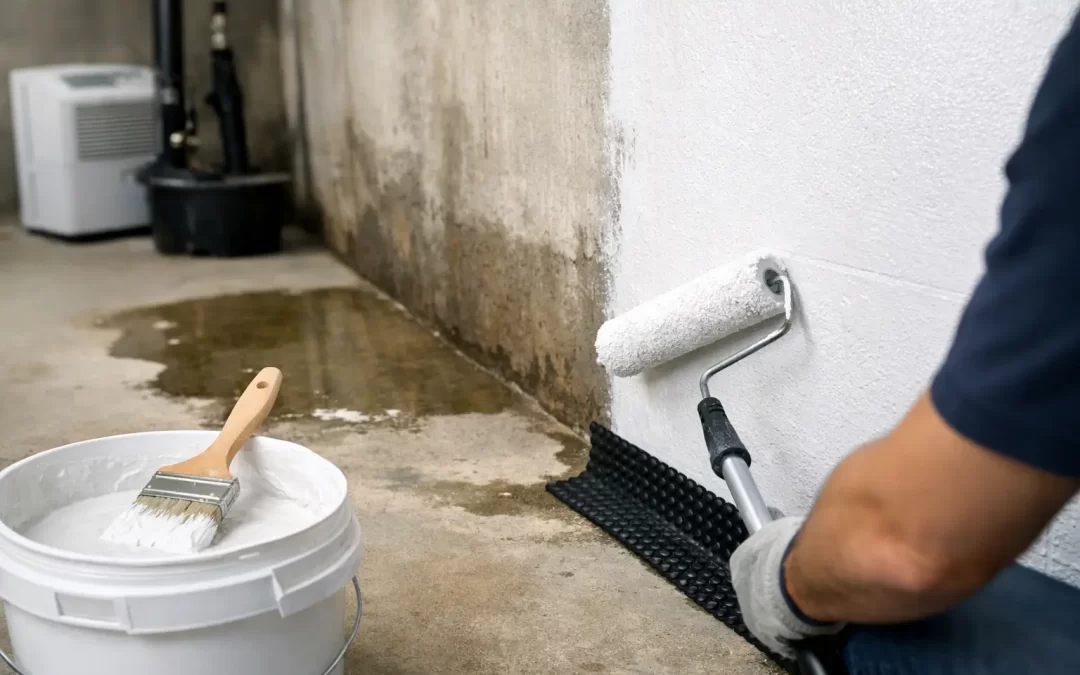
A lot of homeowners reach for basement waterproofing paint because it sounds like a simple fix. Roll it on, seal the wall, and stop the water. That idea is appealing, especially when you are staring at peeling paint, musty smells, or damp concrete after a heavy rain. But in the field, the real question is not whether paint can cover a problem. It is whether it can actually solve it.
What basement waterproofing paint is supposed to do
Basement waterproofing paint is a coating made to slow down moisture movement through masonry surfaces like poured concrete or concrete block. Some products are called waterproofers. Others are sold as masonry sealers. Most are designed to bond to bare concrete and create a surface barrier that resists light moisture.
That matters because basement walls are porous. They can absorb and release water depending on soil conditions, drainage, and hydrostatic pressure outside the foundation. A coating may help reduce minor dampness or surface moisture transmission. It may also improve the appearance of a basement that looks stained or chalky.
What it does not do is repair structural cracks, stop active leaks under pressure, or correct drainage failures around the home. If water is entering because the soil is saturated, the grading is wrong, the weeping tile is failing, or the wall is cracked, paint is not a repair plan. It is a finish.
When basement waterproofing paint can help
There are situations where this type of product has value. If a basement wall feels slightly damp from seasonal humidity or mild moisture migration, a quality masonry coating may reduce that effect. In an unfinished utility space, that might be enough to make the room cleaner and more usable.
It can also help after proper repairs have already been completed. If a crack has been injected, drainage has been corrected, and the wall is dry, a coating can act as an added layer of protection on the interior face. In that case, the paint is not pretending to do the heavy lifting. It is supporting a system that actually addresses the source of water.
This is where expectations matter. If you are dealing with a faint moisture issue and otherwise sound concrete, you may get acceptable results. If you are trying to hold back groundwater with a paint roller, you are likely wasting time.
Where homeowners get into trouble
The biggest problem with basement waterproofing paint is not the product itself. It is the way it gets marketed and the way people hope it will work.
We often see basements where the wall was painted over multiple times while the real issue kept getting worse behind the surface. Water enters through a crack, the coating blisters, efflorescence builds up, and the owner paints again. Months later, there is mold behind finished walls, damaged framing, and a repair that costs more because the warning signs were covered.
Paint can also fail when it is applied to the wrong surface condition. If the wall still has old paint, dust, salts, or active seepage, the new coating may not bond well. Even if the product is applied exactly as directed, hydrostatic pressure can force it off the wall from behind. When that happens, the bubbling and peeling are not cosmetic defects. They are signs that water pressure is winning.
The difference between dampness and water intrusion
This is the distinction that really matters.
Dampness usually means minor moisture movement through concrete, often without visible water running down the wall or pooling on the floor. Water intrusion means liquid water is actively entering the basement through cracks, joints, tie holes, cove joints, or floor defects. One may be manageable with a coating. The other requires diagnosis and repair.
If you notice any of the following, you are beyond the point where paint should be your plan:
- water on the basement floor after rain or spring thaw
- white mineral deposits growing back through painted walls
- horizontal, vertical, or stair-step cracks
- musty odor that does not go away
- bowed walls or shifting concrete block
- recurring leaks at the wall-floor joint
Those signs point to pressure, entry points, or structural movement. In Winnipeg and similar regions with clay soils, freeze-thaw cycles, and seasonal water loading, those conditions are common. Soil expansion and contraction can stress foundation walls, while poor drainage keeps water sitting where it should not.
Why paint does not fix the cause
Water problems are almost always source problems. That source may be roof runoff dumping near the house, negative grading, clogged drainage systems, a failed sump setup, cracked concrete, or pressure building along the outside face of the wall.
An interior coating does nothing to relieve that pressure. It does not move water away from the structure. It does not seal a moving crack in a reliable way. It does not stabilize a settling foundation. It does not rebuild deteriorated concrete.
Think of it this way. If your basement wall is leaking because water is trapped against the exterior, the wall is already doing more than it should. Adding paint on the inside does not change the outside conditions that are causing the leak.
That is why practical waterproofing work starts with diagnosis. You need to know whether the moisture is coming through the wall face, through a crack, at the cove joint, from plumbing, or from condensation. Those are different problems, and they do not all deserve the same solution.
Better options when the basement is actually leaking
If there is active seepage, the fix depends on where the water is entering and why. Crack injection is often used for isolated foundation cracks in poured concrete walls. Interior drainage systems can control seepage at the wall-floor joint and direct water to a sump pump. Exterior waterproofing may be the better route when the outside wall needs excavation, membrane protection, drainage board, and repair of visible defects.
Sometimes the answer is simpler than people expect. Extending downspouts, improving grading, and reducing surface water near the foundation can make a major difference. Other times the issue is more serious, especially if there is wall movement, repeated flooding, or signs of settlement.
A contractor with real foundation experience should be looking at the whole assembly, not just the stain on the wall. That means the concrete condition, drainage performance, surrounding soil behavior, crack pattern, and whether the structure is moving. Foundation Pros of Winnipeg has worked in these conditions long enough to know that moisture is often just the first symptom.
If you still want to use basement waterproofing paint
If your basement has only minor moisture and no signs of active leaking, you can use basement waterproofing paint as part of a limited maintenance approach. Just do it with realistic expectations.
The surface needs to be properly prepared. That usually means removing loose material, cleaning off efflorescence, opening any failed patches, and letting the wall dry as much as possible. If there is an existing coating, compatibility matters. If there is a crack, it should be assessed before anything gets painted over.
Product choice matters too. Some coatings are breathable enough for masonry, while others trap moisture and fail faster. And even a good product needs the right conditions for application. Cold surfaces, damp walls, and rushed prep lead to poor results.
What you should not do is use paint to avoid dealing with warning signs. If the wall keeps getting wet, if the odor keeps coming back, or if the coating starts bubbling, stop treating it like a paint problem.
The cost question
One reason people try waterproofing paint first is cost. A few cans of coating seem a lot cheaper than drainage work or crack repair. On the front end, that is true.
But cheap only stays cheap if the problem is minor. If paint delays proper repairs while water keeps entering, the final bill often includes more than foundation work. It can mean damaged drywall, ruined flooring, mold cleanup, and deterioration of the wall itself. In commercial or institutional properties, that can also mean disruption, liability concerns, and more extensive restoration.
The better question is not whether paint is cheaper. It is whether it matches the problem you actually have.
The practical bottom line
Basement waterproofing paint has a place, but it is a narrow one. It can help with mild moisture on sound masonry. It can improve the appearance of a basement wall. It can serve as a finishing layer after real repairs are complete.
It is not a cure for leaks, pressure, cracking, drainage failure, or structural movement. Those problems need direct repair, and the sooner they are identified, the more options you usually have.
If your basement is showing early signs of water trouble, treat that as a warning, not just a nuisance. A dry-looking wall means very little if the real problem is still building behind it.