
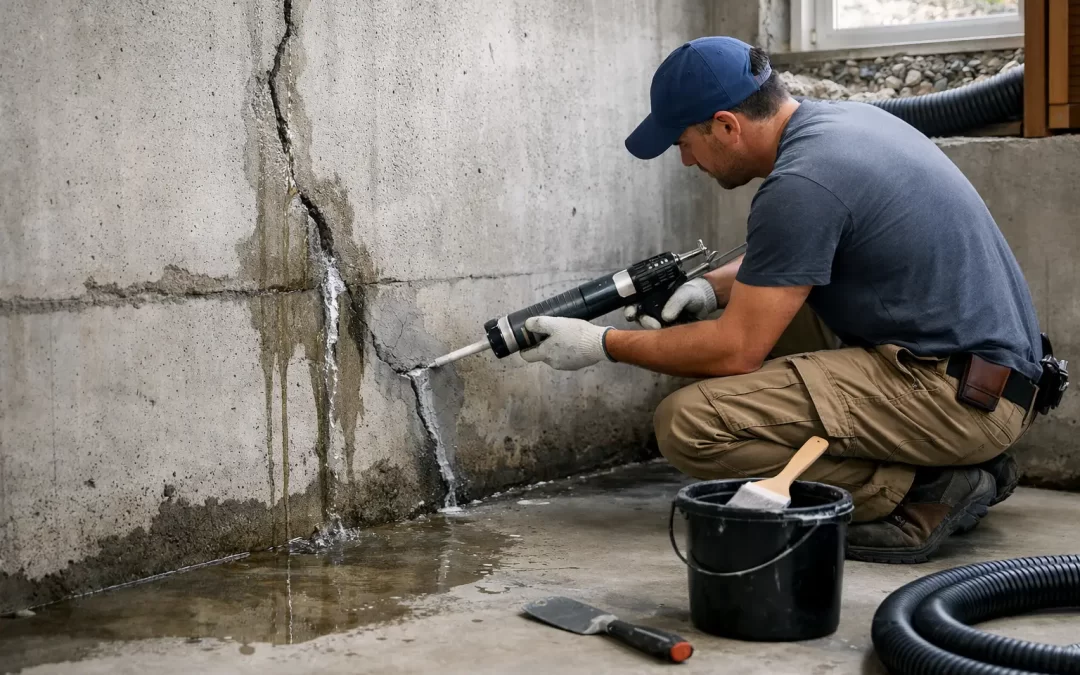
Water on the basement floor rarely starts as a basement problem. If you want to know how to stop foundation leaks, you have to look at the whole system around the structure – soil, drainage, crack conditions, hydrostatic pressure, and how water is moving after every rain or thaw.
That matters even more in places with clay-heavy soils, freeze-thaw cycles, and seasonal groundwater swings. A foundation can look fine for years, then start leaking because the pressure around it changed, a crack opened slightly, or exterior drainage stopped doing its job. The right fix depends on why the leak is happening in the first place.
How to stop foundation leaks at the source
The biggest mistake property owners make is treating visible water as the actual problem. The water you see inside is just the symptom. The source is usually outside the wall, under the slab, or at a failed joint where pressure has found a path into the structure.
Most foundation leaks come from one or more of the same conditions. Cracks in poured concrete walls are common, especially shrinkage cracks or movement-related cracks. Block foundations can leak through mortar joints, porous block cores, or deteriorated parging. Window wells, tie-rod holes, pipe penetrations, cold joints, and the cove joint where the wall meets the floor slab are also common entry points.
Then there is water management. Poor grading, short downspouts, clogged weeping systems, and overloaded sump systems all increase the amount of water sitting against the foundation. More water at the wall means more pressure. More pressure means more leaks.
That is why a lasting repair starts with diagnosis, not guesswork. If you seal a crack from the inside but the exterior wall is still under heavy water pressure, the leak may stop for a while, or it may simply reappear beside the repair. If you install a sump pump but ignore a failed exterior membrane, you may reduce symptoms without actually protecting the wall.
Common causes of leaking foundations
Foundation leaks are not all the same, and they should not be repaired the same way. A hairline shrinkage crack that only leaks during spring melt is different from a horizontal crack linked to soil pressure. A wet spot at the wall-floor joint points to a different issue than water pouring through a window well after a storm.
In residential basements, the most common causes are vertical wall cracks, poor lot grading, and downspouts discharging too close to the home. In older properties, deteriorated damp-proofing or blocked drain tile is often part of the problem. In commercial and institutional structures, leaks may also involve construction joints, slab movement, suspended slab deterioration, or more complex drainage failures.
Regional soil conditions make a major difference. Expansive clay soils can hold water against a foundation and shift with moisture changes. That movement stresses walls, opens cracks, and changes how drainage performs around the building. Freeze-thaw cycles add another layer of stress, especially where surface water is allowed to collect near concrete.
Start with drainage before you start opening walls
If there is one practical step that solves more foundation leak issues than people expect, it is better drainage. This is also the least invasive place to begin.
Check the grade around the building. The ground should slope away from the foundation, not toward it. Even a subtle reverse slope can direct a surprising amount of water against the wall. Soil and landscaping also settle over time, so a grading plan that worked ten years ago may not be working now.
Roof drainage matters just as much. Gutters should be clean, downspouts should discharge well away from the structure, and splash pads alone are often not enough. If roof runoff is dumping beside the foundation, you are feeding the exact pressure that drives water inside.
Drainage improvements will not repair an active structural crack, but they can dramatically reduce water loading on the wall. In many cases, they are part of the permanent solution rather than a separate add-on.
Crack repair is often necessary, but the method matters
When water is entering through a wall crack, the repair needs to match the crack type and the wall condition. This is where a lot of do-it-yourself fixes fall short.
Surface patching is rarely enough. If water is moving through a full-depth crack, coating the inside face may slow the leak temporarily, but it does not address the actual pathway through the wall. Proper crack repair usually involves injection or excavation-based repair, depending on access, wall type, crack movement, and the amount of water involved.
For poured concrete walls, polyurethane or epoxy injection can be effective in the right situation. Polyurethane is often used where active water infiltration is present because it reacts and expands within the crack path. Epoxy is more structural in nature but requires the crack conditions to be appropriate. Neither method is a magic answer for every leak.
If the crack is moving, if the exterior waterproofing has failed, or if there are multiple points of entry, exterior excavation and repair may be the better long-term option. That can include exposing the wall, sealing the crack from the outside, applying waterproof membrane systems, and restoring drainage components around the footing.
Waterproofing versus damp-proofing
Many owners assume their foundation was waterproofed when it was built. Often, it was only damp-proofed. There is a big difference.
Damp-proofing is a basic coating intended to resist soil moisture. It is not designed to handle continuous water pressure. True waterproofing involves membrane systems and detailing that prevent water from entering under hydrostatic pressure.
If an older foundation is leaking repeatedly, especially during heavy rain or seasonal thaw, upgrading from failed or minimal damp-proofing to a proper waterproofing system may be necessary. That is a larger repair, but sometimes it is the only repair that truly solves the problem.
The trade-off is cost and disruption. Exterior waterproofing is more involved than an interior patch or injection repair. But where the leak source is broad, recurring, or pressure-driven, it often delivers the most durable result.
When the leak is at the wall-floor joint
Water at the cove joint, where the wall meets the slab, often points to hydrostatic pressure below the floor or around the footing. In those cases, wall crack repair alone will not solve the issue.
This is where interior drainage systems, sump pits, and sump pumps can play an important role. An interior drainage system is designed to intercept water before it reaches the finished basement space and direct it to a pump discharge point. It does not stop groundwater from existing, but it controls it in a managed way.
That approach can be the right solution when exterior excavation is impractical, when under-slab water pressure is the main issue, or when the property needs a reliable interior water management system as part of a broader repair plan. The key is not to confuse water management with structural repair. Sometimes you need both.
Signs the leak may be tied to a bigger structural issue
Not every leaking foundation is structurally failing, but some leaks are a warning sign that the wall is under stress. Horizontal cracking, stair-step cracking in block walls, inward bowing, slab settlement, sticking doors, and widening gaps at control joints all deserve a closer look.
In those cases, stopping the leak is only part of the job. The structure may also need stabilization, settlement correction, or concrete restoration work to prevent ongoing movement. If the root cause is ignored, water problems tend to return because the building keeps shifting and opening new entry points.
This is one reason experienced diagnosis matters. A basement leak is sometimes just a crack. Other times, it is the first visible sign of a larger envelope or foundation problem.
What not to do if your foundation is leaking
Quick fixes are appealing when water is showing up indoors, but the wrong repair can waste time and make professional repairs harder later. Interior paint-on sealers, generic caulking, and patch products sold as universal waterproofing solutions usually do not hold up under real pressure.
You also do not want to delay if the leak is becoming more frequent. Moisture problems do not stay neatly confined to the concrete. They lead to damaged finishes, mold concerns, musty air, and in some cases deterioration of reinforcement, framing, or floor systems nearby.
The best time to act is early, when the leak pattern is still limited and the repair options are broader.
The practical way to stop foundation leaks long term
The long-term answer is not one product. It is a repair plan based on the actual cause. That may mean regrading and extending downspouts. It may mean crack injection, exterior waterproofing, drain tile repair, sump system upgrades, or structural stabilization. On many properties, it is a combination.
At Foundation Pros of Winnipeg, that is how we approach it – not with a one-size-fits-all sales pitch, but with a practical assessment of where the water is entering, why it is happening, and what repair will actually hold up.
If your basement is leaking, the next heavy rain is not going to be more forgiving than the last one. Get the source identified, fix the cause instead of the symptom, and protect the structure before a manageable repair turns into a much bigger project.