
A sticking door in January is annoying. A stair-step crack that gets wider by spring is a warning. If you are searching for how to correct house settling, the real question is not just how to lift a home back into place. It is how to stop the movement at its source before the damage spreads into the basement, walls, floors, and structure above.
House settling is common to a point. Nearly every building experiences some minor movement over time. The problem starts when settlement becomes uneven, ongoing, or tied to moisture and soil issues that are actively undermining support below the foundation. In Winnipeg and other areas with expansive clay, freeze-thaw cycles, and changing groundwater conditions, that is not rare.
What house settling actually means
Settling happens when the soil below a foundation shifts, compresses, softens, washes out, or loses bearing capacity. The house follows that movement. Sometimes it drops slightly and stabilizes. Sometimes one area sinks more than another, which creates differential settlement. That is when you start seeing diagonal wall cracks, sloped floors, gaps around window frames, and doors that no longer close properly.
Not every crack means structural failure. Hairline shrinkage cracks in concrete can be cosmetic. Drywall can crack from seasonal movement. But when cracks repeat in the same area, widen over time, or line up with exterior foundation cracking, the issue deserves a proper assessment.
What causes settling in the first place
Most serious settlement problems are tied to water and soil. Poor drainage keeps one side of the foundation wet while another side dries out. Expansive clay soils swell when saturated and shrink when dry, which creates repeated movement under footings and slabs. A leaking downspout, broken sewer line, or groundwater pressure can soften the supporting soil. In some properties, older fill soil was never compacted properly, so it compresses long after construction.
Tree roots can also play a role by pulling moisture from the soil near the foundation. So can prolonged drought followed by heavy rain. In cold regions, frost can lift and disturb the ground, then leave voids or weakened support when it thaws.
That is why there is no one-size-fits-all answer to how to correct house settling. The visible crack is often just the symptom. The repair plan has to match the reason the house moved.
How to tell if settling is minor or serious
Homeowners often wait because they are unsure whether the signs are normal aging or a structural problem. A few clues usually separate the two.
Minor settlement tends to be older, stable, and mostly cosmetic. Serious settlement keeps changing. Cracks get longer or wider. Basement walls show movement. Floors become noticeably uneven. Exterior brick or parging separates. Water starts entering through foundation cracks or floor-wall joints.
If one corner of the home is dropping, you may notice windows out of square, trim separating from the wall, or interior doors latching only if you force them. In commercial or institutional buildings, settlement may show up as slab displacement, column distress, masonry cracking, or water infiltration tied to structural movement.
The timing matters too. If the problem is getting worse season after season, it should be addressed before the repair becomes larger and more expensive.
How to correct house settling the right way
Correcting settlement starts with diagnosis, not lifting. A contractor needs to determine where the movement is happening, how much movement has occurred, whether it is active, and what is driving it. That usually includes reviewing crack patterns, floor elevations, drainage conditions, grading, moisture exposure, and the condition of the foundation itself.
Step 1: Identify the source of movement
The first step is confirming whether the issue is caused by shrinking clay, saturated soil, erosion, plumbing leaks, frost action, or poor original support. If you skip this part and only patch cracks, the house can continue to move and reopen the same damage.
Step 2: Stabilize the foundation
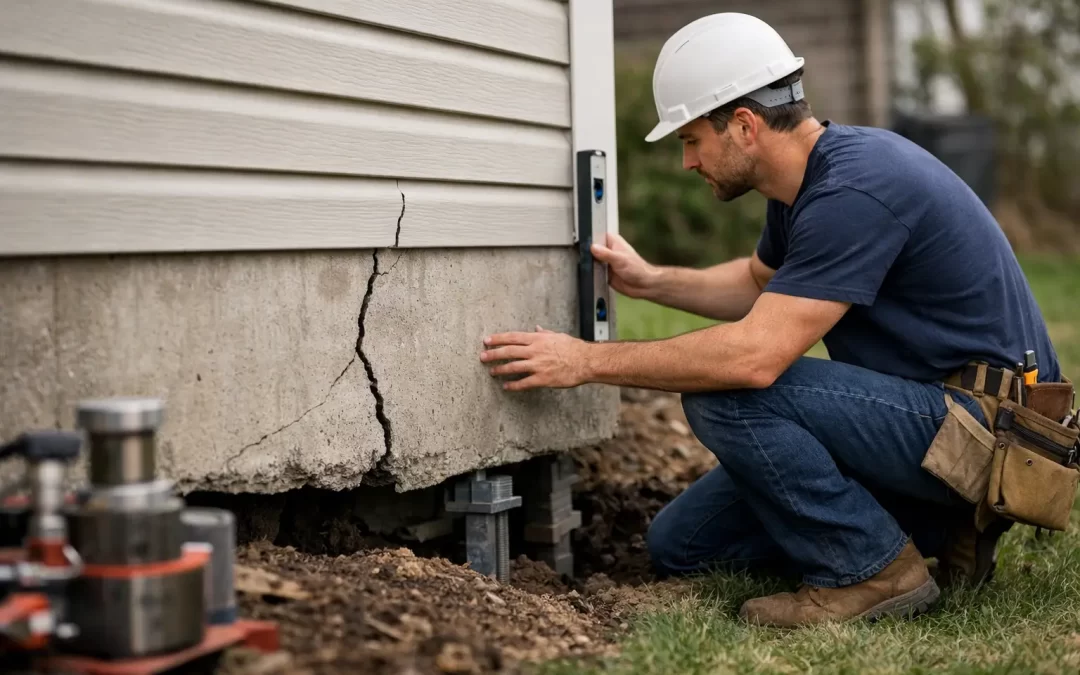
Once the cause is clear, the foundation usually needs to be stabilized before cosmetic repairs happen. Depending on the structure and soil conditions, this may involve helical piers, push piers, underpinning, or other engineered support methods that transfer the load of the house to deeper, more stable bearing strata.
Pier systems are common when a footing has lost support and needs to be lifted or held in place. Underpinning can be effective when a specific section of foundation needs additional depth or support. For slabs, the solution may be different than for full basement foundations.
Not every house can or should be lifted back to perfectly level. Sometimes the goal is full lift. Sometimes the safer and more realistic goal is stabilization with partial recovery. It depends on the age of the structure, the amount of movement, the framing response, and the risk of forcing brittle finishes or utilities beyond what they can handle.
Step 3: Manage water around the structure
If drainage problems are feeding the settlement, they have to be corrected at the same time. That may include regrading, extending downspouts, repairing leaking drains, improving surface runoff control, or installing interior or exterior waterproofing and sump systems.
This is where many property owners make a costly mistake. They pay to stabilize the structure but leave the moisture problem in place. Even if the piers hold, ongoing water exposure can still damage concrete, increase basement leakage, and affect adjacent areas of the property.
Step 4: Repair the damaged foundation and finishes
After the structure is stabilized, cracks in the foundation may need injection, sealing, or structural repair depending on their size, location, and movement history. Interior finishes can then be repaired with a much lower risk of recurring damage.
The order matters. Cosmetic patching before stabilization often turns into repeat work.
Common repair methods and when they make sense
There is no single best repair for every settling house. Helical piers are often used where soil conditions and access make them a good fit, and they can work well for lighter structures or where torque-measured installation is useful. Push piers may be suitable when the structure itself can provide the reaction force needed for installation. Traditional underpinning may still be the right call in some situations, especially where specific sections need deeper support or where site conditions limit other options.
For slab settlement, mudjacking or polyurethane lifting may help in the right circumstances, but those methods are not the same as foundation underpinning. They can correct some slab elevation issues, yet they are not a cure for deeper foundation settlement caused by poor bearing soil under a footing.
That is why inspection matters. The repair has to match both the type of foundation and the mechanism of failure.
Can you fix house settling yourself?
You can improve some contributing conditions yourself. Cleaning eavestroughs, extending downspouts, correcting simple grading issues, and watching for plumbing leaks are all worthwhile. Those steps may reduce ongoing soil movement and water pressure around the home.
What you should not do is assume crack filler, drywall patch, or floor shims will correct settlement. DIY work can hide symptoms while the structure continues to move. By the time the problem becomes obvious again, the repair scope is usually bigger.
If you are dealing with recurring cracks, a wet basement, or movement that affects doors, windows, and floors, it is time for a foundation specialist, not another cosmetic patch.
When to act fast
Some settlement issues can be monitored for a short period. Others need immediate attention. Fast action matters when cracks widen quickly, water is entering through the foundation, basement walls show displacement, or you see clear signs of one area of the house dropping.
Commercial and institutional properties have even less room for delay because settlement can affect occupant safety, envelope performance, and long-term restoration costs. What starts as movement in one area often leads to moisture intrusion, concrete deterioration, and more extensive structural repair if left alone.
A practical repair plan should explain what is happening, what needs to be stabilized first, and which supporting repairs are needed to keep the problem from returning. That is the approach Foundation Pros of Winnipeg has built its work around for years – solve the cause, stabilize the structure, and repair the damage in the right order.
The best time to deal with house settling is before the next freeze-thaw cycle, before another wet season, and before small cracks turn into structural and moisture problems that touch every level of the building. If your house is showing signs of movement, get it assessed while the repair is still straightforward.