
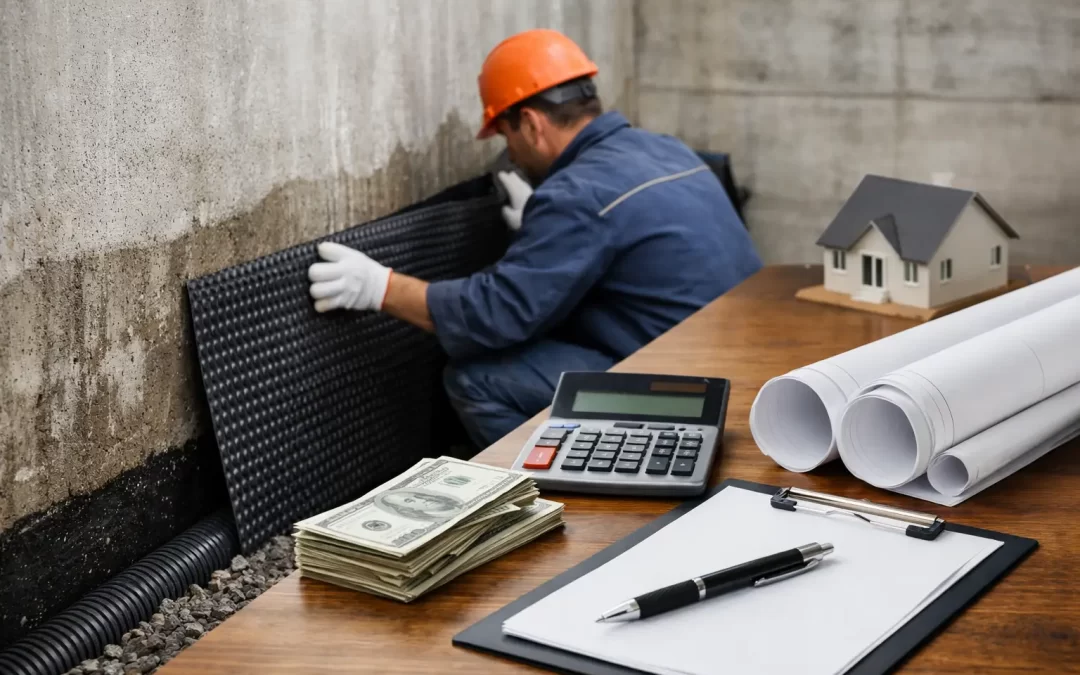
A damp basement rarely stays a basement problem for long. What starts as a wet corner, a musty smell, or a thin crack in the wall can turn into mold, damaged finishes, and foundation deterioration. That is why basement waterproofing cost matters less as a fixed number and more as a question of scope – what is causing the water, how far the damage has gone, and what it takes to stop it for good.
Homeowners often want a simple price before anything else. That is understandable. But waterproofing is not one product with one rate. A basement can leak because of surface grading, clogged weeping tile, hydrostatic pressure, wall cracks, failed sealants, window wells, floor joints, or a sump system that cannot keep up. The cost changes based on the source, and the wrong repair is often the most expensive one because you pay for it twice.
What affects basement waterproofing cost
The biggest factor is where the water is coming from. If the issue is minor and limited to one crack or one wall penetration, the repair may be relatively contained. If water is entering along the cove joint where the floor meets the wall, through multiple cracks, or across a broad section of wall, the repair plan gets more involved.
Access also matters. Exterior waterproofing is more labor-intensive because it usually requires excavation down to the footing. That means soil removal, protection of landscaping, exposure of the wall, repair of defects, membrane application, and drainage improvements before backfilling. Interior systems are often less disruptive and less expensive up front, but they solve a different problem. They manage water after it reaches the foundation wall rather than stopping it outside.
The condition of the foundation itself is another cost driver. If the wall is structurally sound and the problem is mainly moisture, pricing stays in the waterproofing lane. If the wall is cracked, bowing, settled, or deteriorated from long-term seepage and freeze-thaw exposure, waterproofing may need to be paired with structural repair. That is where costs rise, but it is also where proper planning matters most.
In Winnipeg and across regions with expansive clay soils, seasonal moisture swings add another layer. Soil movement can open and reopen cracks. Heavy snowmelt and prolonged rain can increase hydrostatic pressure around the foundation. A waterproofing plan that ignores those regional conditions may look cheaper at first and fail early.
Typical basement waterproofing cost ranges
For small targeted repairs, such as sealing a single crack from the inside, costs are generally much lower than full-system work. A straightforward crack injection or localized repair might run a few hundred to over a thousand dollars depending on crack size, wall access, and whether there is active leakage.
Interior drainage systems usually cost more because they involve cutting the slab, installing drainage channeling, directing water to a sump basin, and restoring the floor. Depending on basement size and layout, that can range from several thousand dollars to well over ten thousand.
Exterior waterproofing is often the highest-ticket option because of excavation and site work. For one problem wall, pricing may start in the several-thousand-dollar range and climb from there. Full-perimeter excavation, membrane installation, drainage board, footing drainage upgrades, and backfill can push the project much higher.
If sump pump work is part of the solution, add the cost of the basin, pump, discharge line, battery backup if needed, and any electrical or drainage modifications. Window well drainage, downspout extensions, grading correction, and concrete removals can also affect the final number.
That is why broad national averages are only so useful. They do not account for soil conditions, frost depth, access limitations, basement finish level, or the actual cause of the leak.
Interior vs. exterior waterproofing cost
This is where many property owners get stuck. They are not just comparing price. They are comparing repair philosophies.
Interior waterproofing is usually less expensive and faster to install. It is a practical option when excavation is difficult, when the goal is to control seepage efficiently, or when outside access is limited by decks, additions, hardscaping, or neighboring structures. But interior systems are water-management systems. They do not eliminate exterior pressure against the wall.
Exterior waterproofing typically costs more, but it addresses the problem at the source by keeping water away from the wall and improving drainage at the footing level. When a wall has open cracks, deteriorated parging, failed dampproofing, or persistent lateral water entry, exterior work is often the more complete repair.
There is no universal right answer. Some homes need exterior excavation on one elevation and interior drainage in another area. Some only need grading and crack repair. Others need a sump upgrade and no excavation at all. A real estimate should explain why a method fits the problem instead of selling one system for every basement.
Hidden costs homeowners miss
The visible leak is not always the full job. Finished basements can add demolition and restoration costs. If drywall, flooring, insulation, or built-ins have to be removed for access, the waterproofing quote may not include reconstruction unless that is stated clearly.
Moisture damage can also expose secondary issues. Mold remediation, rotten framing, rusted posts, and damaged electrical components all add cost beyond the waterproofing itself. In older basements, opening a wall or slab may reveal previous patchwork repairs that failed because they never dealt with drainage pressure.
On the exterior, access can change the job fast. Tight lot lines, mature trees, concrete walks, attached garages, and utility locations can all increase labor and equipment time. That does not mean the estimate is inflated. It usually means the site is complicated.
When a low waterproofing quote is a bad deal
A low number is tempting, especially when water is already showing up in the basement and you want it handled quickly. But waterproofing fails when the contractor treats symptoms instead of causes.
If the proposal is vague, be careful. Terms like seal, patch, or waterproof without explaining where water is entering, what materials will be used, and whether drainage is being corrected should raise questions. The cheapest bid often skips preparation, uses short-term coatings, or avoids the harder part of the work.
This matters even more when structural movement is involved. A leaking crack in a settling wall is not just a moisture issue. If the repair does not account for movement, the crack can reopen and the leak returns.
How to budget for basement waterproofing cost
The best way to budget is to separate urgent repairs from optional improvements. Stopping active water entry comes first. Protecting finishes, improving drainage performance, or adding battery backup can follow if needed.
Ask whether the quote covers diagnosis, moisture control, crack repair, drainage components, cleanup, and warranty terms. You should also ask what conditions could change the price after work begins. A contractor who works on foundations every day should be able to explain likely variables without dancing around them.
For commercial and institutional properties, budgeting is even more case-specific. Waterproofing costs may involve traffic coatings, suspended slab repairs, expansion joints, plaza deck membranes, or phased restoration work. The principle is the same, though. The more clearly the source of water is identified, the more accurate the repair plan and price will be.
Is basement waterproofing worth the cost?
If the basement is actively leaking, yes. Waiting usually expands the repair area and raises the final bill. Water does not improve concrete, finishes, indoor air quality, or resale value.
Even when the leak seems minor, the long-term costs can be significant. Repeated moisture exposure can damage stored contents, promote mold growth, stain walls, weaken finishes, and contribute to foundation deterioration over time. A controlled, early repair is almost always cheaper than a major restoration project later.
At Foundation Pros of Winnipeg, that is how we look at it in the field. The real question is not just what basement waterproofing cost is today. It is what the property owner pays if the problem is left alone through another wet season, another freeze-thaw cycle, or another year of soil movement.
Getting an accurate waterproofing estimate
A useful estimate starts with inspection, not guesswork. The contractor should look at crack patterns, grading, downspouts, drainage paths, moisture staining, floor-wall joints, sump performance, and any signs of settlement or wall movement. If all you get is a price over the phone without anyone looking at the problem, it is not a real plan.
Good waterproofing is problem-specific. One basement needs crack injection. Another needs excavation. Another needs an interior drain tile system with sump discharge improvements. The cost is different because the repair is different.
If you are seeing water on the floor, wall staining, peeling paint, musty smells, or foundation cracks, the smartest move is to get the basement checked before the next heavy rain forces the issue. A clear diagnosis gives you something better than a cheap number – it gives you a repair that actually holds.