
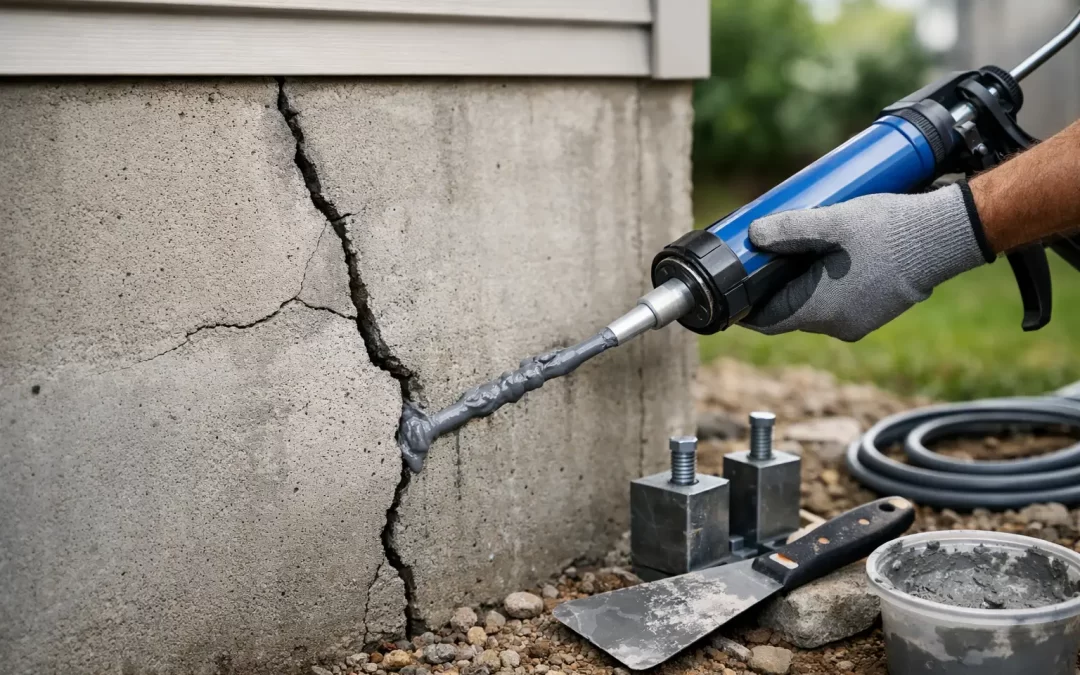
A hairline crack in a basement wall can sit quietly for months. Then spring melt hits, the wall starts weeping, and what looked minor turns into a wet floor, damaged drywall, and a bigger repair bill. That is why homeowners keep asking the same question: what is the best foundation crack repair method?
The honest answer is that there is no single best method for every crack. The right repair depends on what caused the crack, whether the wall is leaking, whether the crack is still moving, and whether the issue is cosmetic, moisture-related, or structural. If you treat all cracks the same, you risk sealing over a symptom while the real problem keeps working behind the wall.
What the best foundation crack repair method depends on
Before talking about products or techniques, you have to identify the crack type. A vertical shrinkage crack in poured concrete is a very different problem from a stair-step crack in block foundation, or a horizontal crack caused by soil pressure. In Winnipeg and across the Prairies, foundation walls also deal with expanding clay soils, freeze-thaw stress, poor drainage, and seasonal water pressure. Those conditions matter because they affect both the cause of the crack and the repair that will actually last.
If the crack is dry, narrow, and has not changed over time, the repair may be straightforward. If water is entering, if the wall is bowing, or if doors and floors inside the house are starting to shift, the crack is only part of the story. At that point, repair planning should include drainage, waterproofing, stabilization, or settlement correction.
The most common repair methods and where they work best
Epoxy injection
Epoxy injection is often used when a poured concrete wall has a non-moving structural crack and the goal is to restore some of the wall’s original strength. The epoxy bonds the concrete across the crack and creates a rigid repair.
This method can work well on dry cracks where movement is not ongoing. It is less forgiving if the wall is still shifting or if water is actively entering the crack. In those cases, a rigid material may not be the best choice because future movement can reopen the problem nearby or along the same line.
Polyurethane injection
For leaking cracks, polyurethane injection is frequently the better option. This material reacts to moisture, expands into voids, and forms a flexible seal that helps stop water infiltration.
If the main complaint is a wet basement or seepage through a poured concrete wall, polyurethane injection is often the best foundation crack repair method. It does not mean every leaking crack should be treated this way without inspection, but for active water entry in a typical residential basement wall, it is one of the most effective targeted repairs available.
The trade-off is that polyurethane is primarily a water-stopping solution. It is not the same as correcting settlement, reducing outside water pressure, or reinforcing a compromised wall. If exterior drainage is poor, if grading slopes toward the house, or if hydrostatic pressure is high, the crack may be sealed while the conditions that caused it remain in place.
Exterior crack repair and waterproofing
Sometimes the best repair is not from the inside at all. Exterior excavation allows the contractor to expose the wall, clean the crack, repair it from the outside, and apply waterproofing membranes or drainage improvements.
This approach is often the strongest option when water pressure outside the wall is a major factor, when crack deterioration is advanced, or when multiple issues are happening together. It is more invasive and usually costs more than an interior injection, but it addresses the water at the source. For homeowners with repeated leakage, this can be money better spent than another short-term interior patch.
Carbon fiber reinforcement and wall stabilization
A horizontal crack is a different category. If the wall is bowing inward or showing signs of lateral pressure from soil, simple crack filling is not enough. In that case, stabilization methods such as carbon fiber reinforcement, wall anchors, or bracing may be required.
This is where people get into trouble trying to identify the best foundation crack repair method based on internet photos alone. A horizontal crack is often less about the crack itself and more about the wall losing the fight against outside pressure. The correct repair is the one that stabilizes the wall first, then deals with moisture and surface damage.
Routing and surface sealants
Basic surface patching has a place, but it is limited. Routing and sealing can improve appearance and may help with very minor, non-structural cracks in some above-grade applications. It is not a serious repair for an active basement leak or a structural foundation problem.
If water is moving through the wall, surface products rarely solve it for long. They tend to fail because they do not penetrate the full crack path or relieve external pressure.
When crack repair alone is not enough
A foundation crack is often the visible result of a bigger issue. The wall cracked because it was stressed by settlement, water, frost, poor drainage, or expansive soils. If those conditions are still active, the best repair method may involve more than the crack itself.
For example, a leaking crack near a basement corner might also point to clogged weeping tile, overloaded soil at the footing, or roof runoff dumping beside the foundation. A stair-step crack in masonry may reflect footing movement. Repeated seasonal cracking can be tied to moisture swings in clay soils. In those cases, crack repair should be paired with drainage correction, sump pump improvements, grading changes, underpinning, or concrete restoration work depending on the property.
That is why an experienced contractor does not start with a tube of sealant. They start with the reason the crack formed.
How to tell which repair you may need
A few field signs can help separate a manageable repair from a more serious one. Vertical cracks in poured concrete are often repairable with injection methods if the wall is otherwise stable. Diagonal cracks can suggest settlement, especially if they widen at one end or appear with sticking doors and uneven floors. Horizontal cracks, displaced concrete, or inward wall movement should be treated as structural warnings.
Water staining, efflorescence, damp air, or mold smell in the basement suggest moisture is already moving through the wall system, even if you do not see standing water. Commercial and institutional properties may also show spalling, exposed reinforcing steel, joint failure, or slab deterioration around the same time. Those signs call for a broader restoration approach, not just crack filling.
Why regional conditions matter
In Manitoba, foundation performance is tied closely to soil and water behavior. Clay-heavy soils expand when wet and shrink when dry. That movement creates pressure and differential settlement. Add freeze-thaw cycles, spring runoff, and aging waterproofing, and small cracks can grow quickly.
That is why local experience matters. The best foundation crack repair method in one region may not be the best in another if soil movement, frost depth, and groundwater conditions are different. A repair that looks fine in the short term may fail early if it was chosen without understanding how the site behaves through the seasons.
Foundation Pros of Winnipeg has worked in these conditions since 1995, and that matters because local crack patterns are not random. They usually follow drainage, soil pressure, or settlement patterns that show up again and again across residential and commercial properties in this region.
The mistake that costs property owners the most
The expensive mistake is delay. A small leaking crack can lead to interior damage, mold concerns, insulation loss, and progressive wall deterioration. A structural crack can widen until repair options become more invasive and more expensive.
The second mistake is choosing a method based only on price. The cheapest repair is rarely the best value if it does not match the actual failure. An injection repair on a moving wall, or a surface patch on an active leak, can leave you paying twice.
So what is the best foundation crack repair method?
For a typical leaking vertical crack in a poured concrete basement wall, polyurethane injection is often the best targeted repair. For a dry structural crack with no ongoing movement, epoxy injection may be the better choice. For cracks driven by outside water pressure, exterior waterproofing and drainage correction may be the real answer. For horizontal cracks or bowing walls, stabilization comes first.
That is the practical answer property owners need: the best method is the one that fits the crack, the cause, and the conditions around the foundation.
If you see a crack getting wider, letting in water, or showing up with other signs like wall movement or settlement, treat it early. A clear diagnosis now is usually much cheaper than a major repair after another freeze-thaw cycle or another wet season. The right fix starts with knowing what the wall is telling you.