
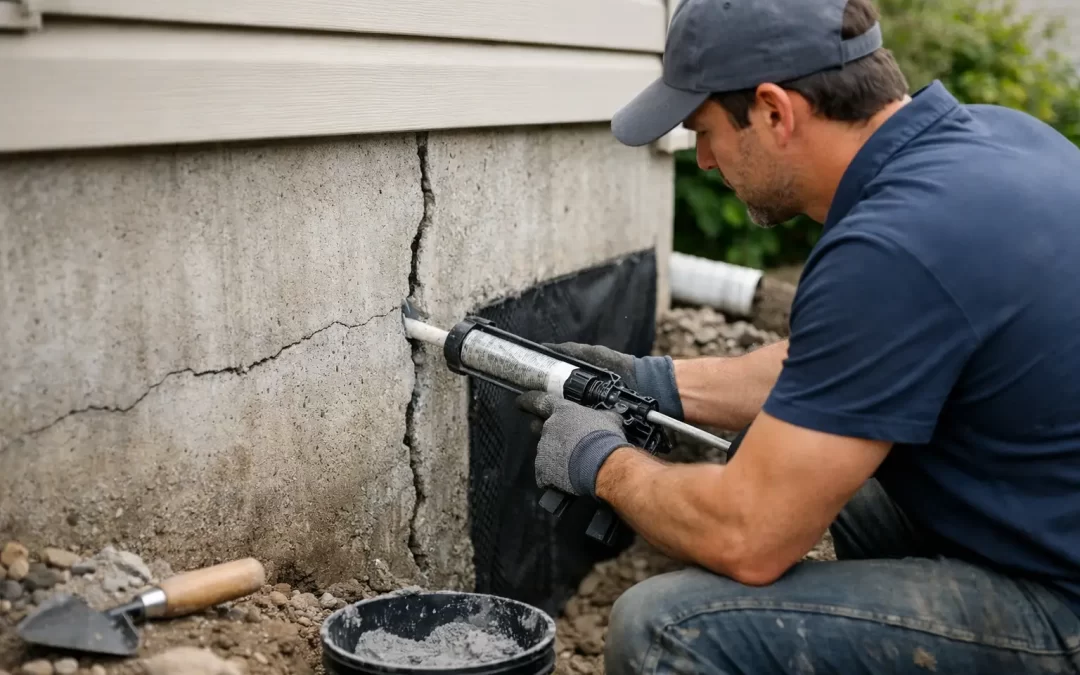
A crack on the outside of your foundation is not just a cosmetic problem. If water is already finding that line through the wall, every rainstorm and spring thaw gives it another chance to push farther in. For homeowners dealing with wet basements, shifting soil, or visible wall cracks, knowing how to repair foundation crack from outside starts with one basic fact – the right repair depends on why the crack formed in the first place.
Some exterior cracks are straightforward and can be sealed before they become a bigger leak. Others point to movement, settlement, frost pressure, or drainage failure. If you treat all cracks the same, you risk hiding the symptom while the actual problem keeps working in the background.
How to repair foundation crack from outside the right way
Exterior foundation crack repair usually begins with exposure of the wall, cleaning the crack area, sealing the crack with the appropriate material, and then restoring waterproof protection and drainage at the foundation face. That sounds simple on paper. In the field, the details matter.
A narrow vertical shrinkage crack in poured concrete is very different from a stair-step crack in block foundation, and both are different again from a horizontal crack caused by pressure from saturated soil. The repair has to match the wall type, the crack pattern, and the site conditions around the house.
If the crack is actively leaking, widening, offset, or part of a bowed wall, exterior crack sealing alone is usually not enough. In those cases, you may need structural repair, drainage correction, or both.
Start with the crack type, not the sealant
This is where many property owners lose time and money. They see a crack, buy a patch product, and apply it to the exposed section above grade. That may improve the appearance for a season, but it rarely addresses the full crack path below grade where water pressure is highest.
Vertical cracks are often caused by concrete shrinkage or minor settlement. These can sometimes be repaired effectively from the outside if the wall is otherwise stable. Diagonal cracks may suggest settlement or differential movement, especially near corners, window openings, or changes in footing load. Horizontal cracks are more serious because they often indicate lateral soil pressure against the wall.
Block and concrete foundations also behave differently. Poured concrete tends to crack in cleaner lines. Block walls can leak through mortar joints, cells, and multiple weak points, which makes exterior waterproofing and drainage more involved.
When exterior foundation crack repair makes sense
Repairing a foundation crack from outside makes the most sense when the goal is to stop water before it enters the wall system. An exterior repair can seal the crack at the source, protect the wall with a membrane, and relieve water pressure with proper drainage improvements.
That is especially important when the crack extends below grade, the basement is leaking during wet weather, or previous interior patching has not worked. Exterior repair also gives a contractor a chance to inspect the wall surface directly for honeycombing, spalling, deteriorated parging, failed damp-proofing, and signs of broader wall distress.
For many homes in areas with heavy clay soils and freeze-thaw stress, the crack is only part of the problem. Soil movement and poor grading keep loading the wall year after year. If you only seal the crack and leave the drainage issue alone, the repair may not last the way you expect.
The basic exterior repair process
The first step is excavation along the affected wall section down to the footing or at least below the crack termination. That gives clear access to the full length of the crack. Surface repairs at grade level are not enough if the crack continues lower.
Once exposed, the wall has to be cleaned thoroughly. Dirt, loose concrete, old coatings, and deteriorated parging need to be removed so the repair material can bond properly. Depending on the wall condition, that may involve wire brushing, grinding, pressure washing, or chipping out weak material.
After cleaning, the crack itself is repaired. For non-structural leaking cracks in poured concrete, common methods include polyurethane or epoxy injection used in combination with exterior crack sealing, or routing and filling with specialized repair compounds. Exterior waterproof membranes are then applied over the repaired area, often extending beyond the crack to protect the surrounding wall.
In many cases, a drainage board is added over the membrane to shield it during backfill and help direct water downward. If site conditions call for it, weeping tile or perimeter drainage may also need repair or replacement. Then the excavation is backfilled properly with attention to grading so water drains away from the foundation instead of settling against it.
What works, what fails, and why
Not every repair product belongs on every foundation. That is where real diagnosis matters.
Hydraulic cement can help stop active seepage in some conditions, but it is not a cure-all for an exterior crack that runs deep below grade. Surface mastics and brush-on coatings may help with minor dampness, but they are not structural repairs and they do not compensate for movement. Epoxy can provide strong bonding in certain stable crack conditions, but if the wall is still moving, a rigid repair may fail. Polyurethane is often better where water sealing is the main objective because it can expand into voids and handle slight movement better.
The same trade-off applies to excavation scope. Spot excavation may be enough for one isolated crack. If the wall has multiple leaks, deteriorated waterproofing, or chronic drainage failure, partial repair can become repeat repair. Sometimes a more complete exterior waterproofing plan is the more practical long-term decision.
Signs you should not treat this as a simple exterior crack repair
If the crack is wider than about one-quarter inch, shows displacement, keeps reopening, or is paired with inward wall movement, sticking doors, sloped floors, or repeated water entry, the issue may be structural. Exterior crack sealing alone will not correct settlement, bowing, or foundation rotation.
The same is true if you see stair-step cracking in masonry, crumbling block, or widespread concrete deterioration. Those conditions may require reinforcement, underpinning, wall stabilization, or concrete restoration beyond a basic crack repair.
For commercial and institutional properties, crack repair also has to account for load paths, traffic vibration, adjacent slabs, and existing restoration history. A leaking crack in a parking structure or retaining wall is not diagnosed the same way as a single residential basement wall crack.
Local conditions make a big difference
In regions with expansive clay, freeze-thaw cycling, and high seasonal moisture swings, foundations take more stress than many homeowners realize. Soil swells when wet, shrinks when dry, and pushes hard against foundation walls when drainage is poor. Add winter frost and spring melt, and small defects become recurring problems.
That is one reason exterior crack repair should never be treated as just a patching job. The wall, the soil, the drainage pattern, and the water source all have to be considered together. Foundation Pros of Winnipeg has worked in these conditions since 1995, and that experience matters because the same crack pattern can have very different causes depending on the site.
Can you repair a foundation crack from outside yourself?
For a hairline crack in exposed concrete above grade, a careful homeowner may be able to clean and seal the surface temporarily. But most true exterior foundation crack repairs are below grade and involve excavation, waterproofing materials, safe access, and proper backfilling. That is not a small weekend project.
There is also the risk of doing a neat-looking repair that traps moisture, misses the actual leak path, or damages nearby utilities, landscaping, or drainage components. If the crack is tied to foundation movement, the cost of guessing wrong can be much higher than the cost of getting it assessed properly at the start.
What to do next if you see an outside foundation crack
Take clear photos, note whether the crack changes over time, and watch for related signs inside the basement like damp spots, staining, musty smells, or water on the floor after rain. Check gutters, downspouts, grading, and any areas where water pools near the house. Those details help narrow down whether the crack is isolated or part of a larger moisture problem.
Then get the wall looked at before another wet season does more damage. The best repair is the one that solves the reason the crack formed and stops the water where it starts. If you handle it early, you usually have more options, lower repair costs, and a much better chance of avoiding bigger structural work later.
A foundation crack on the outside of the house rarely gets better by waiting. If the wall is telling you something, it pays to listen while the repair is still manageable.