
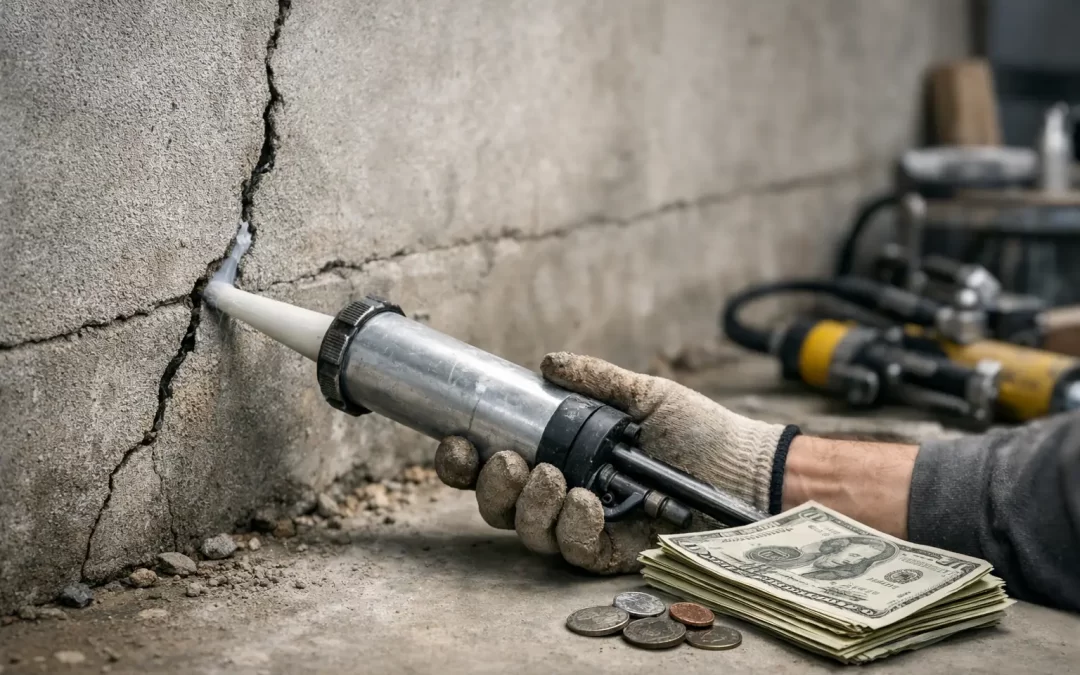
A hairline crack in a basement wall can look minor right up until the first heavy rain puts water on the floor. That is usually when property owners start asking how much does foundation crack repair cost, and the honest answer is that the price depends on what the crack is doing, why it formed, and whether the problem is only cosmetic or part of a bigger structural or water-intrusion issue.
For most properties, the cost is not driven by the crack alone. It is driven by the repair method, the accessibility of the area, the amount of water pressure against the wall, and whether the foundation is moving. A simple isolated crack is one thing. A leaking crack tied to settlement, poor drainage, or shifting clay soil is something else entirely.
How much does foundation crack repair cost in real terms?
In practical terms, a straightforward crack repair on a poured concrete foundation may cost a few hundred to a couple thousand dollars, while more involved repairs can run much higher when structural movement, excavation, waterproofing, or multiple cracks are involved. If a wall is bowing, rotating, or continuing to shift, the repair can move beyond crack sealing and into stabilization work.
That is why online averages only go so far. Two homes can both have a basement crack, but one may only need an interior injection and the other may need exterior excavation, membrane repair, drainage correction, and follow-up concrete restoration. On paper they sound similar. On site, they are not even close.
What actually drives foundation crack repair cost?
The first cost factor is the type of crack. Hairline shrinkage cracks are usually less expensive to address than wide, active, or stair-step cracks. Vertical cracks in poured concrete can sometimes be repaired efficiently if there is no major displacement. Horizontal cracking, diagonal cracking, or block foundation movement usually raises concern because those patterns can point to pressure, settlement, or structural stress.
Water makes everything more expensive. A dry crack that has been stable for years is different from a crack that leaks during spring melt or after every storm. Once moisture is involved, the repair plan may need to address hydrostatic pressure, waterproofing failure, drainage issues, and mold risk in finished spaces.
Access also matters. If the crack is exposed and easy to reach from inside, that usually keeps labor lower. If the repair requires removing finished walls, working around mechanical systems, excavating outside, or dealing with landscaping, decks, walkways, or limited clearance, the job gets more involved quickly.
The final major factor is whether the crack is a symptom or the main problem. If the foundation moved because of expansive clay, poor backfill drainage, freeze-thaw cycling, or long-term settlement, sealing the crack without addressing the cause is often a short-term fix. That may look cheaper at first, but it usually costs more later.
Common repair methods and what they mean for price
Epoxy or polyurethane injection
For many poured concrete wall cracks, interior injection is one of the more cost-effective options. Epoxy is typically used when structural bonding is needed, while polyurethane is often chosen for active water infiltration because it expands and seals against moisture.
This type of repair is usually less disruptive than exterior excavation and can work well when the crack is isolated and the wall is otherwise sound. The limitation is that injection addresses the crack path itself. If the exterior waterproofing has failed or water pressure remains high, additional work may still be needed.
Exterior crack repair and waterproofing
When water is entering from outside, the more durable fix may involve excavating down to the foundation wall, exposing the crack, repairing the damaged area, and installing or restoring waterproofing protection. This is more labor-intensive and naturally costs more, but in the right situation it deals with the source rather than just the symptom.
Exterior repairs are often the better long-term choice when there is repeated leakage, deteriorated coating, visible exterior wall damage, or drainage problems around the property. They also allow the contractor to inspect the full wall condition below grade.
Structural stabilization
If the crack is tied to movement, the scope changes. Wall anchors, bracing systems, underpinning, or settlement correction can all enter the conversation depending on the failure pattern. That is where costs can rise significantly because now the job is not just about sealing concrete. It is about stopping ongoing movement and protecting the building.
For commercial and institutional properties, there may also be engineering requirements, access staging, traffic control, or phased repair scheduling that add to the total project cost.
Why Winnipeg-area conditions change the equation
In this region, soil and moisture conditions are a big part of the story. Red River clay expands and contracts with moisture swings, which puts repeated stress on foundations. Add freeze-thaw cycles, seasonal groundwater changes, and aging waterproofing systems, and small cracks can become active leaks or settlement indicators faster than many owners expect.
That local context matters when someone gives you a price. A low quote that ignores soil pressure, site drainage, or recurring water intrusion may not be saving you money. It may just be postponing a larger repair.
This is one reason experienced contractors look beyond the visible crack. They want to know whether eavestrough discharge is too close to the foundation, whether grading is trapping water near the wall, whether the crack shows displacement, and whether there are signs inside the structure like sloping floors, sticking doors, or repeated basement dampness.
When a cheap repair is the wrong repair
Everyone wants a reasonable price, and that makes sense. But foundation work is one of those areas where the cheapest number can create the most expensive outcome.
If a contractor prices a crack repair without identifying why the crack formed, there is a good chance the estimate is incomplete. Sealing over movement does not stop movement. Patching concrete without relieving water pressure does not stop leakage. Repairing one visible crack while ignoring adjacent deterioration may leave the real failure in place.
A good estimate should explain the condition, the recommended repair method, and what the repair is meant to accomplish. Is it cosmetic only? Is it intended to stop water infiltration? Is it structural? If that is not clear, the number on the page does not mean much.
Signs the repair may cost more than a basic crack fix
Some warning signs suggest the project may go beyond a standard crack repair. If the crack is wider at one end, if the wall is bowed, if the crack leaks regularly, or if there are multiple cracks in the same area, expect a more detailed assessment. The same goes for block foundations, finished basements with hidden damage, and older structures with prior patching attempts.
Commercial buildings and parking structures can bring another layer of complexity because concrete deterioration may involve corrosion, delamination, spalling, joint failure, or slab edge damage in addition to cracking. In those cases, repair pricing depends on restoration scope, not just one crack line.
How to get a useful estimate
The best estimate is not just a price. It is a diagnosis. A contractor should look at crack width, direction, leakage history, wall condition, drainage conditions, and signs of structural movement. Photos help, but on-site inspection is usually what separates a rough guess from a repair plan.
Ask what caused the crack, whether the wall is still moving, and whether the repair addresses water, structure, or both. Ask what happens if the underlying drainage issue is left alone. That conversation tells you a lot about whether you are getting a real solution or a quick patch.
For property owners in Manitoba and Western Ontario, local experience matters. Soil behavior, frost action, and groundwater conditions here are not abstract engineering terms. They directly affect what repair method will last.
Foundation Pros of Winnipeg approaches crack repair that way – by looking at the actual failure, the water conditions, and the practical repair path instead of forcing every project into the same standard fix.
The real cost question
When people ask how much does foundation crack repair cost, they are usually trying to answer a bigger question: how serious is this, and what will it take to stop it from getting worse? That is the right question to ask.
A small, stable crack may be a manageable repair. A leaking or shifting foundation can become much more expensive if it is ignored through another wet season or another freeze-thaw cycle. If you have a visible crack, recurring basement moisture, or signs your foundation is moving, the smartest move is to have it assessed early, while the repair options are still simpler and the costs are still under control.
The best time to deal with foundation trouble is before the next storm, before the next spring melt, and before a small crack turns into a structural repair project.